
The Race in Antibody Drug Development: The Next Breakthrough in COVID-19 Treatment?
Although vaccines are seen as the ultimate means to end the COVID-19 pandemic, their development and distribution still require time. Multiple biopharmaceutical companies are accelerating the development of monoclonal antibody drugs, aiming to provide short-term protection or treatment options before vaccines are launched. This article reviews the development strategies, potential application scenarios, and challenges faced by companies such as Regeneron, Eli Lilly, Amgen, and Vir.
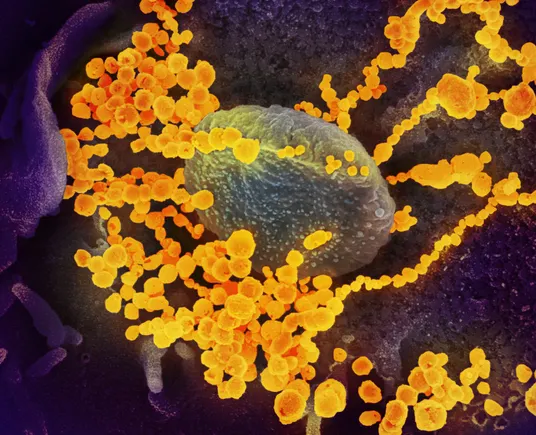
Vaccines are likely to be a key tool in ending the spread of the coronavirus, so it is not surprising that dozens of accelerated vaccine development projects are attracting attention.
Even though vaccine development has set an unprecedented record for speed,the first vaccines will not be available until next year at the earliest,and it may take even longer to vaccinate enough people to achieve "herd immunity" in the United States, thereby more effectively curbing the spread of SARS-CoV-2.
That is why many experts believe the antibody drug development efforts being advanced by a number of companies are crucial.Regeneron、Eli Lilly、AmgenandVir Biotechnologyare leading an increasingly competitive development race aimed at creating therapies that can provide short-term protection against the coronavirus or help treat those who have been exposed or infected. These therapies could be more effective than the current standard of care—Gilead's antiviral drug remdesivir—whichappears to help speed recovery in COVID-19 patientsbut has limited effectiveness.
"These drugs could be the best chance for meaningful success in the near term," Scott Gottlieb, former FDA commissioner, wrote recently in acommentaryin The Wall Street Journal.
However, even if successful—which is not guaranteed—these injectable biologic drugs will not completely solve the pandemic. For example, their effects are temporary, and manufacturing will also face challenges.
But many believe these drugs have a good chance of passing clinical trials and being deployed before a vaccine is available. Combined with large-scale testing and contact tracing measures, they could become key tools for controlling the outbreak.
"Can we significantly reduce social distancing requirements with this?" asked Ronny Gal, a biotechnology analyst at Bernstein, in an interview.
The first clinical trials of antibodies against COVID-19 are expected to begin next month. As these trials approach, BioPharma Dive spoke with several drug developers and outside observers to discuss the prospects.
What are antibody therapies against the coronavirus, and how do they work?
When defending against foreign invaders, the human body produces antibodies specifically tailored to the task. Vaccines provide such lasting protection because they train the immune system to recognize pathogens, allowing immune cells to remember the virus and prepare to attack when it appears.
Monoclonal antibodies against the coronavirus would replace the antibodies the body might produce to fight the disease. These engineered antibodies, designed to mimic antiviral immune cells, would be injected into the body to suppress an existing infection or protect people who have been exposed to the virus.
This approach has previously been proven effective against infectious diseases. For example,a major study in the Democratic Republic of Congoshowed that an antibody combination therapy developed by Regeneron reduced the risk of death in Ebola patients compared with two other treatments. This success has boosted hopes at Regeneron and other companies of replicating similar results.
"Antibodies were the most effective treatment for Ebola. Whether that will be the case for the coronavirus is uncertain," said Diane Griffin, a professor of infectious diseases and neurology at Johns Hopkins University School of Medicine, in an interview. "But it at least highlights the possibility that antibodies could be an important component of treatment."
In fact, these drugs are a synthetic version of convalescent plasma therapy—which relies on antibodies from recovered patients. But the engineered versions are easier to scale up for production because they are made in fermentation tanks rather than depending on plasma donors.
However, the biggest problem with antibody treatments is their durability. Their effects last only as long as the antibodies survive—possibly a month or more. As Gal put it: "The weakness is that they are not a one-and-done solution."
If vaccines are the real solution, why focus on antibodies?
First, there is risk in hoping forvaccines developed at historic speedto become an immediate panacea—testing typically takes years. There are many uncertainties ahead. No vaccine has yet been successfully developed against any type of coronavirus, and the most advanced candidates rely on unproven new technologies that have never been produced at the global scale needed to address a pandemic.
Additionally, some vaccines may only work for a portion of the population. Among the hardest to benefit are the elderly with weaker immune systems—who are precisely the ones most at risk of severe complications from coronavirus infection. Vaccines also take time to take effect and are not immediate.
"We don't know if a vaccine will work, when it will work, or how well it will work," said George Scangos, CEO of Vir, in an interview. "I hope a vaccine works, but I don't think a vaccine will provide universal protection for everyone."
Putting vaccines aside, there is almost nothing available to doctors to treat infected patients. To date, the FDA has only granted emergency use authorization for remdesivir and the generic drug hydroxychloroquine. But remdesivir requires infusion over 5 to 10 days and has only been shown to potentially shorten hospital stays for severely ill patients. Whether hydroxychloroquine is beneficial remains unclear.
Social distancing measures have so far helped prevent exponential growth in cases and eased pressure on healthcare systems. But some states have begun or are about to relax these measures, with growing pressure to reopen the economy. Experts predict this could lead to a surge in new cases or a second wave in the fall. Until a vaccine is available, a temporary solution is urgently needed to help people.
"We need something to bridge that gap," said Andrew Adams, chief scientific officer for RNA therapeutics at Lilly, in an interview. Adams also works on antibodies.
Monoclonal antibodies could help. They are made using mature technologies that have already been used to produce multiple marketed drugs for cancer and autoimmune diseases—and have become effective drugs for other infections like respiratory syncytial virus. Their effects are immediate, meaning they can be quickly tested in living infected patients.
Some COVID-19 antibody drugs in development
- Regeneron: Antibody combination therapy, unmodified, target trial start: June
- Vir: Single-agent therapy, modified antibody, target trial start: Summer
- Amgen/Adaptive: Not disclosed, not disclosed, not disclosed
- Lilly/AbCellera/Junshi: Both approaches being evaluated, not disclosed, target trial start: June
Source: Companies
How will antibody drugs be used?
Unlike vaccines or antiviral drugs, antibodies are unique in their dual potential to treat and prevent viral infection. Ray Deshaies, senior vice president of global research at Amgen, said in an interview that they could serve as a "short-term preventive measure" for healthcare workers at "extremely high" risk of contracting COVID-19, or as a treatment for those who are sick.
Proving that antibodies can treat people with existing disease will be faster and easier than proving their preventive effect. Like vaccines, antibodies would need to be shown in longer-term trials to prevent infection. And it will be up to developers to decide the best time to intervene in the course of the disease.
For example, Scangos said Vir plans to test its antibody candidate in multiple scenarios: patients already hospitalized, newly diagnosed patients who have not yet developed respiratory problems, or people who have just been exposed to the virus.
"How exactly it is used will depend on which scenario works best," he said.
Are antibodies for everyone, or only certain groups?
Amgen's Deshaies said the fastest path to success for antibody drugs may be through intravenous administration in hospitals or clinics, rather than auto-injectors that patients can use themselves. They are also complex to produce, transport, and supply at scale. Taken together, "widespread use in the general population will be difficult," he said.
More realistically, antibodies would provide the greatest value to high-risk groups, such as healthcare workers, the elderly, or the immunocompromised.
Christos Kyratsous, vice president of infectious disease research and viral vector technology at Regeneron, said in an interview that especially the latter group may not benefit from a vaccine, or may take longer to benefit even if they do. "There is a big question about whether this population will respond to a vaccine," he said. "So I think monoclonal antibodies are not just a bridge until a vaccine is available."
Nevertheless, it is still unclear how much demand there will be if antibodies prove successful, and whether supply can meet it. Executives at all four companies said they are producing the drugs "at risk"—that is, before confirming they work. Their production capacity may depend on the required dose size and whether multiple antibodies need to be combined—the latter would increase manufacturing difficulty.
"These factors will obviously affect how the product is used," Kyratsous said.
What other challenges do antibodies face?
Bernstein analyst Gal believes antibodies have a good chance of success in clinical trials because multiple development efforts are using technologies that have already produced treatments for infectious diseases like Ebola.
The mechanism of action is also "fairly straightforward." In general, antibody drugs bind to the "spike" protein that SARS-CoV-2 uses to enter cells, thereby preventing the virus from entering.
But there are also reasons for skepticism. Whether drugs that bind the spike protein can prevent infection or stop its spread in humans has not been proven. Even approved antibody drugs for infectious diseases are not effective for everyone—for example, AstraZeneca's (now owned by Sobi) RSV drug Synagis only reduces hospitalization rates by about 50%.
Jen Heemstra, associate professor of chemistry at Emory University, noted that whether engineered antibodies can "grab onto" the target viral protein "as tightly as planned" is unknown, partly due to how they are designed and manufactured. Additionally, although antibodies are intended to temporarily mimic the effects of a vaccine, they are "unlikely to reach the same level of efficacy," she said in an interview.
"There is cautious optimism that they will help treat the disease," she said. "But that optimism is tempered by the recognition that no single therapy will work for all patients and all stages of infection, and that there is still much we don't know about the virus that could derail even the most well-laid plans."
Deshaies also raised another major potential concern: there are examples in past research of antibodies "exacerbating" the effects of other members of the coronavirus family. "That certainly weighs on our minds and on others taking this approach," he said.
How do the antibodies being developed differ?
Regeneron, Amgen, Vir, and Lilly each use different screening and development approaches. These initial experiments could produce different types of products: for example, a single antibody versus a combination of two or three antibodies, or antibodies that mimic natural human antibodies versus those modified to improve their properties.
Each of these choices has trade-offs. More antibodies mean more ways to attack the pathogen and can address potential mutations—but may not allow doses to be pushed to higher levels. Modified antibodies may extend their duration of action but may make them appear more "foreign" to the immune system, raising potential issues.
Regeneron is advancing a combination of two natural antibody synthetic versions. "We don't like to change solutions that nature has evolved over millions of years," Kyratsous said.
Vir is modifying its antibodies to make them last for months and, in at least one of its candidates, attempting to enhance their potency. Scangos believes concerns that these modifications could have harmful effects are "overblown."
Amgen and Lilly are still weighing their strategies. "This is what we talk about all day," said Lilly's Adams. The two companies are partnering with smaller firms—Amgen with Adaptive Biotechnologies, and Lilly with AbCellera and Junshi Biosciences.
Regeneron and Lilly plan to start human trials next month. Vir expects to start trials in the summer. Amgen has not given a specific timeline. "We are moving as fast as we can," said Amgen's Deshaies. But these timelines mean that by fall, several companies could have meaningful data.
Johns Hopkins' Griffin cautioned developers to make sure they fully understand their candidates before moving so quickly.
"Be humble about your antibody and what it does," she said. "And make sure it protects rather than makes things worse."