
Deep Dive
来自我们记者的行业洞察

New Jazz cancer drug approval could drive blockbuster sales
The U.S. FDA approved Jazz Pharmaceuticals' Ziihera (zanidatamab-hrii) in combination with chemotherapy (with or without immunotherapy Tevimbra) for first-line treatment of HER2-positive gastrointestinal cancers on Tuesday. The drug had previously received accelerated approval for advanced biliary tract cancer, generating $24.8 million in related revenue in 2025. Analysts estimate the market opportunity for the new indication exceeds $1.5 billion, and the FDA imposed no excessive safety restrictions. Jazz and partner Zymeworks will share milestone payments, with Zymeworks having already received $250 million, plus $1.3 billion in future milestones and royalties.


Massachusetts biotech venture capital warms up, but early-stage startups remain neglected
The latest MassBio industry report indicates that in the first half of 2026, Massachusetts biotech companies secured nearly $3.5 billion in venture capital, up 25% year-over-year, with eight Boston-area biotech companies completing IPOs. However, funding is concentrating in more mature companies, with the average seed round amount dropping to $4.65 million, while the average Series A round approaches $80 million, leaving early-stage startups facing financing difficulties. The report also includes a first-ever "China Watch" section, showing that China's drug pipeline grew 36.2% year-over-year, surpassing Europe for the first time.
Safety concerns spur FDA to again halt testing of Regenxbio gene therapy
Regenxbio's gene therapy RGX-121 has encountered another FDA clinical hold in clinical trials due to "possibly" benign masses found on spinal MRIs of five subjects. The company stated that patients are asymptomatic and clinically stable, but its plan to resubmit the marketing application in June has been shelved. Previously, the therapy had been placed on hold in January due to safety concerns and was rejected by the FDA in March.
Cell therapy manufacturing company Cellares plans to lay off 100 employees
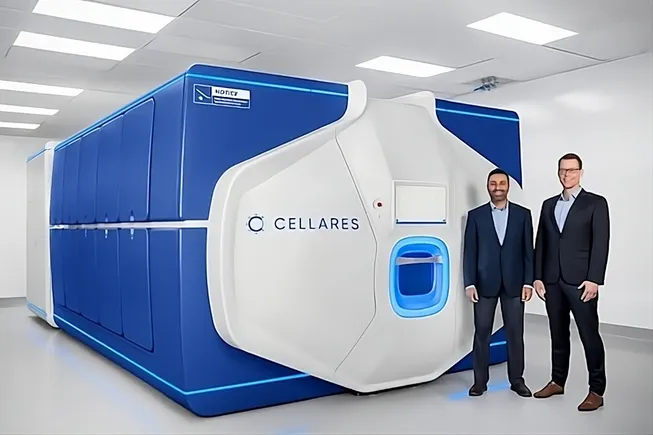
Cellares, a biotech startup focused on cell therapy manufacturing, announced a restructuring two months after completing a $327 million Series D funding round, planning to lay off 100 employees due to the loss of an unnamed pharmaceutical partner. The layoffs mainly affect software engineers, quality control, design, and manufacturing specialists, and are expected to take effect on October 20.
Roche commits to lean-mass preservation with Hanmi obesity deal
Roche announced a licensing agreement with Hanmi Pharmaceutical to obtain global rights outside South Korea for the novel obesity drug HM17321. The drug aims to promote weight loss while preserving muscle tissue and is considered a next-generation therapy targeting potential deficiencies of GLP-1 class drugs. The deal includes an upfront payment of $190 million, with milestone payments potentially reaching up to $2.3 billion.
Cost and Perception: Two Key Variables Reshaping the GLP-1 Market Landscape
The competition between Eli Lilly and Novo Nordisk in the weight-loss market is extending from the supply side to pricing and public perception. Latest earnings reports and multiple surveys indicate that affordability, physician prescribing preferences, and social stigma are becoming key factors influencing the trajectory of the GLP-1 drug market.

Biotech investors gamble on M&A. Some drugmakers are betting on themselves instead.
The biotech industry has long relied on M&A exits, but in recent years, companies such as BridgeBio and Madrigal have achieved better-than-expected sales through independent commercialization, changing investors' entrenched expectations of 'listing to sell.' This article analyzes the strategic considerations, success cases, and industry impact behind this trend.

FDA, after turbulent year, leaves drugmakers guessing on its direction
In the year since Marty Makary took the helm of the FDA, frequent personnel changes and unconventional public communications have left the pharmaceutical industry deeply concerned about regulatory predictability. This article, based on a joint investigation by Healthcare Dive, MedTech Dive, and BioPharma Dive, examines the trust crisis facing the agency amid leadership transitions, shifting review policies, and transparency reforms.