
The rise of China's biotech industry raises industry thresholds, forcing American companies to adjust strategies
The rapid rise of Chinese biotech startups is reshaping the global drug development landscape. American pharmaceutical companies and investment institutions are finding that the number of licensing deals from China has surged, and drug quality has significantly improved, evolving from "me-too" drugs to "me-better" or even first-in-class drugs. Facing geopolitical uncertainties and increasingly fierce competition, American biotech companies must reassess their positioning and focus on truly differentiated innovation.
David Li, founder of a newly established biotechnology company, realized early in his startup journey that he needed to rethink his strategic planning. Following the convention of biotech entrepreneurs, Li conducted competitive research before seeking investment, listing potential drug targets his startup, Meliora Therapeutics, could develop and comparing them against potential competitors.
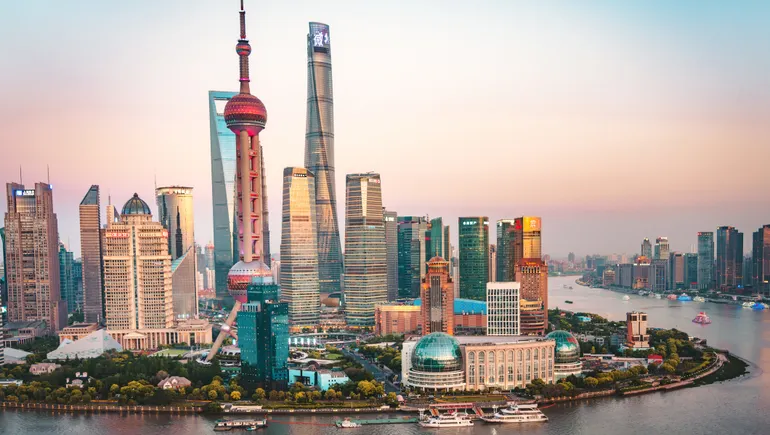
Li quickly found that Chinese biotech companies were already working on many of the targets on his list. Curious, he visited Shanghai and Suzhou and witnessed a bustling scene—numerous startups racing against time to advance their projects.
"They don't really think much about the U.S. market. They just want to create more value, survive, and differentiate themselves from domestic peers," Li said. "They move fast, they are numerous, and they are highly competitive."
Li's experience reflects a trend that could pressure U.S. biotech companies and change their drug development strategies. A growing number of large pharmaceutical companies arelicensing experimental drugs from China. Venture capital firms are also trying similar strategies, creating new U.S. startups around compounds developed in Chinese labs. This shift has come suddenly, with licensing deals surging over the past two years, and it occurs against the backdrop of a lengthening shadow of U.S.-China biotech competition.
Executives and investors interviewed by BioPharma Dive at the J.P. Morgan Healthcare Conference in January share Li's view. They expect such deals to accelerate, forcing U.S. biotech companies to work harder to stand out in the process.
"We've been warning people that we are losing our edge," said Paul Hastings, CEO of cell therapy maker Nkarta and former chairman of the U.S. lobbying group Biotechnology Innovation Organization. "Innovation is now at our doorstep."
Ivonescimab may be the clearest example of this trend. The drug was developed by China's Akeso Therapeutics and licensed to U.S. company Summit Therapeutics. Results from a recent lung cancer study in China showed thativonescimab outperformed Keytruda—the latter being Merck's star immunotherapy drug and currently the most profitable single product in the pharmaceutical industry.
This finding "has put a huge global spotlight on what's happening in China," said Boris Zaïtra, head of business development at Roche, which sells a product competing with Keytruda.
Rapidly advancing research
The current deal boom stems fromChinese government initiatives aimed at boosting the nation's biotech capabilities, namely increasing investment in technological innovation. In the life sciences sector, the plan provides funding, discounted or even free lab space, and grants to support biotech companies in what Li describes as a "robust ecosystem."
The results are evident. Cities like Shanghai and Suzhou boast a skilled scientist workforce and hundreds of local companies employing them. Science parks similar to those in Cambridge, Massachusetts, and the San Francisco biotech hub have emerged.
Chinese companies often move faster and at lower cost than their U.S. counterparts. Li estimates that a startup can go from founding to clinical trials in as little as 18 months or less, whereas in the U.S. it takes years. Clinical trial enrollment is fast, and staffing and supply chain costs are lower, helping companies advance drug development in a more cost-effective manner.
"If you're a local company running trials in China, just by virtue of the network you're in, you pay a fraction of what we pay, and patient access is sufficient to let you move quickly," said Andy Plump, head of R&D at Takeda Pharmaceutical. "These are enabling factors."
These factors have contributed to a large and growing pipeline of drug candidates, many designed as "me-too better" versions of existing drugs, analysts at investment bank Jefferies wrote in a December report. Initially focused on oncology, Chinese companies are now producing high-quality compounds across multiple therapeutic areas, includingautoimmune diseasesandobesity。
"China had a massive investment boom, the cost of capital was very low, and all these companies built huge product pipelines," said Alexis Borisy, biotech investor and founder of venture capital firm Curie.Bio. "Whatever anyone is doing in biotech and pharma, you can probably find 10 to 50 similar versions in the Chinese ecosystem."
From 'Me-too' to 'Me-better'
For years, Western biopharma executives have been examining pipelines in Chinese biotech labs—an exploration that has yielded some licensing deals and research collaborations. Borisy was also involved, founding EQRx in 2020 to bring Chinese versions of approved drugs to the U.S. at lower prices. EQRx's plans were thwarted bythe U.S. Food and Drug Administration's review of drugs tested only in a single country's population.
Now, however, the pace of deals has sharply accelerated. There are several reasons. According to Plump, one is the rising quality of drug compounds being developed. "Me-too" drugs are becoming "me-better" drugs that could surpass existing therapies and generate substantial revenue for companies—such as BeiGene's blood cancer drug Brukinsa, which, innew prescriptions for leukemia treatment, surpassed two established similar drugs last year.
Another reason, Plump said, is that Chinese companies are becoming more innovative, starting to work on drug targets that may not yet have produced marketed drugs, or where the most advanced competition is still in early testing. Li noted that Chinese companies are tackling harder "engineering problems," such as manufacturing complex multifunctional antibody drugs or antibody-drug conjugates (ADCs).
"There are so many companies that new assets keep emerging," Li said.
Similar to the U.S., Chinese biotech companies are also competing for funding, prompting them to consider licensing deals with multinational pharmaceutical companies. Meanwhile, these pharma companies are looking for cheaper drugs to fill pipeline gaps ahead of upcoming patent cliffs. These two trends are "colliding," said Kristina Burow, managing director at Arch Venture Partners. "I don't think this is going to end."
Statistics support Burow's view. According to Jefferies, both the number and average value of deals for drugs developed in China hit records last year. Another report by Tim Opler of Stifel shows that pharma companies now license about a third of their in-licensed molecules from China, up from about 10% to 12% between 2020 and 2022.
"I see tremendous opportunities in working with Chinese companies," said Takeda's Plump.
Several venture-backed startups have also been built around China-originated drugs, includingKailera Therapeutics、Verdiva Bio、Candid TherapeuticsandOuro Medicines, all of which launched with nine-figure funding rounds.
"In the past few years, many truly high-quality drug molecules and data have emerged from China," said Robert Plenge, head of R&D at Bristol Myers Squibb. "And it's no longer just repeating the exact same types of molecules."
Geopolitical risks
These deals occur against an uncertain backdrop. Over the past year or so, the U.S. Congress has been considering multiple versions of the Biosecure Act, which wouldrestrict U.S. biotech companies from working with certain Chinese drug contractors. A House committee has called for new restrictions onclinical trials involving Chinese military hospitals. Tariffs threatened by the incoming Trump administration could also affect multiple industrial sectors.
"We don't know what the new administration will do," said Jon Norris, managing director at HSBC Innovation Banking.
The Biosecure Act "has been going around in circles," Hastings added. He believes the legislation, even if passed, would have minimal impact. Instead, Hastings worries future tariffs could be more problematic. "Other goods from China will face tariffs. Does that include raw materials and innovation? It's hard to imagine it wouldn't," he said.
But executives and investors expect deals to continue, meaning U.S. biotech companies will have to do more to compete.
"U.S. companies need to figure out what they can bring that no one else can," said Arch's Burow.
Borisy said startups working on first-of-their-kind drugs need to be more secretive than ever. "Don't publish papers. Don't give talks at scientific conferences. Don't put up posters. Make your initial patent applications as obscure as possible," he advised.
"The moment a paper, poster, talk, or patent comes out, assume it has already spawned a thousand ships."
Those who go further should assume Chinese companies will catch up quickly and may bring better drugs. "The days when you could come out with a bad molecule and open up a new field are over," he said.
Neil Kumar, CEO of BridgeBio Pharma, believes more intense competition is not necessarily a bad thing. As pharma companies source drugs from "cheaper" starting points and advance them faster, drug development could become more efficient.
Venture capital funding may flow to newer ideas rather than building a bunch of similar companies. "If this suddenly makes us less 'me-too,'" Kumar said, "I have no problem with that."
Li similarly believes that U.S. companies will need to focus on "novelty and innovation" in the future. At his own company, Li is now working on things "we believe others can't touch."
"The rules of the game haven't changed. Bring something truly differentiated to market," he said. But "the bar has been raised."
Gwendolyn Wu and Jacob Bell contributed reporting to this article.