
New drugs for postpartum depression are on the market, but barriers to diagnosis and treatment remain
Although two drugs specifically targeting postpartum depression (PPD) have been approved and launched in the United States, their clinical application has progressed slowly due to factors such as insufficient social awareness, late establishment of diagnostic criteria, and poor treatment accessibility. This article reviews the history of PPD from being overlooked to gaining formal diagnostic status, analyzes the limitations of existing treatment options, and explores the practical challenges in promoting the new drugs.
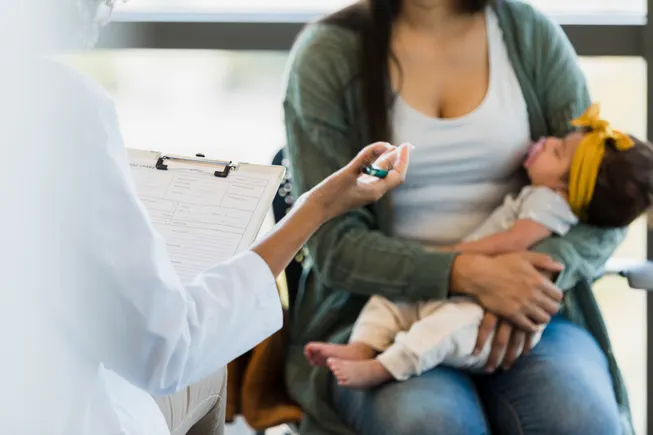
When Katherine Wisner began researching postpartum mental health in the 1980s, the field barely existed. At the time, there was relatively little research on mental illness related to pregnancy, and postpartum depression was not yet well recognized.
Wisner, now the associate director of perinatal mental health at Children's National Hospital in Washington, D.C., recalled that a senior male supervisor dismissed her report of a new mother experiencing severe depression and suicidal thoughts. "You must be mistaken," she remembered him responding, "Women don't get depressed during pregnancy because they are content."
For years, the notion that "having a baby is the happiest time in a mother's life" persisted, despite research showing that this is not always the case. However, over time, researchers and doctors began to acknowledge the various mental health effects that postpartum women can experience, which spurred the development of related drug research.
Today, doctors in the U.S. have two drugs specifically approved to treat postpartum depression (PPD). This condition, which is estimated to affect one in eight postpartum women, can be quite severe. Both drugs come from the biotechnology company Sage Therapeutics. An intravenous injection called Zulresso was approved in 2019, while a daily oral pill called Zurzuvae was approved last summer.
The approval of these two drugs came after years of development. However, they both come with risks and limitations, and their adoption in clinical practice has been slow—some experts attribute this to the still-evolving understanding of PPD and its treatments.
"As a country and society, we haven't fully recognized this," Wisner said.
Slow path to recognition
For over 70 years, mental health professionals have relied on a guide called the Diagnostic and Statistical Manual of Mental Disorders (DSM) to diagnose and treat patients.
But the DSM did not recognize PPD until the 1990s, when its fourth edition defined the condition as "a major depressive disorder occurring within four weeks after delivery."
The next edition in 2013 went further, defining PPD as a major depressive episode occurring during pregnancy or within four weeks after delivery. The latest version also highlights possible co-occurring anxiety and panic symptoms.
"The field slowly developed and eventually did have a formal diagnosis of depression," Wisner said.
The long lag in recognizing PPD left women affected by the condition to cope alone for decades. For example, it wasn't until 2015 that the American College of Obstetricians and Gynecologists issued its first guidelines on screening pregnant and postpartum women for symptoms.
The U.S. Preventive Services Task Force and the American Psychological Association later made similar recommendations.
"Historically, the message was that pregnancy is the best time in a woman's life, and there's no happier moment than after the baby is born," said Julia Riddle, a reproductive psychiatrist and assistant professor at the University of North Carolina School of Medicine. "It took a lot of effort to really prove that maybe it's a bit more complicated."
Diagnostic challenges
Even with formal screening recommendations, diagnosis can still be challenging. Doctors typically use tools such as the Edinburgh Postnatal Depression Scale and the Patient Health Questionnaire to determine whether a new mother may have PPD or anxiety.
If PPD is suspected, psychotherapy, or "talk therapy," is usually the first-line option. Medication is typically reserved for more severe cases or for women who have previously taken medication.
Actually accessing treatment can also be a barrier. Michelle Visser, a mother and psychotherapist who treats pregnant and postpartum women, recalled that after she gave birth, few people asked about her mental health.
"A lot of people don't necessarily know when they need help because people don't talk about it," Visser said. "You don't know what you don't know."
Partly for this reason, PPD is often missed, and even when diagnosed, it is not well treated. According to the U.S. Centers for Disease Control and Prevention, about 60% of women with postpartum depressive symptoms are not diagnosed, and of those who are diagnosed, half do not receive treatment.
"People tend to do the [Edinburgh] scale and then that's it," said Judith Joseph, a psychiatrist at NYU Langone Health and a researcher in Sage's PPD drug trials. "A lot of times, there's shame in reporting any sadness to your doctor because if your baby is happy and healthy, you should be too."
Additionally, not all obstetrician-gynecologists are trained to treat PPD, as it is not always part of standard care. Access to treatment can also vary based on an individual's insurance coverage, resources, or other health issues.
Shortcomings of treatments
Before Sage's drugs, doctors treating PPD typically used standard antidepressants, such as selective serotonin reuptake inhibitors (SSRIs).
These medications can be helpful, but they usually take four to ten weeks to work, and they may not be effective at all. Evidence supporting their use for PPD is also limited.
"When people have depression, it affects their functioning and quality of life," Joseph said. "Telling them they'll feel better in eight to ten weeks is very hard to accept for someone who has a lot of responsibilities, wants to bond with their baby, and wants to return to the life they once had."
Antidepressants can also cause weight gain, gastrointestinal issues, irritability, and sleep disturbances.
Doctors also need to assess whether a patient has bipolar disorder before prescribing antidepressants. Up to one in five people screened for PPD may actually have bipolar disorder, a mental illness that causes mood swings and psychosis. Antidepressants can worsen bipolar disorder.
Additionally, for pregnant or postpartum women, treatment can be a difficult choice, as they may feel pressured not to seek treatment or worry that medication could affect their child through breastfeeding. (Though breastfeeding while on medication does not necessarily pose a risk to the infant.)
"There's stigma because people think motherhood should come naturally to women," Joseph said. "But [people] don't necessarily acknowledge the challenges."
Socioeconomic status, race, and family support can also influence how people view seeking help.
"In the healthcare system, we treat people of color very differently in many ways," Visser said. "Those families are very worried that they will be seen as unfit parents and that action will be taken against them."
Sparse drug pipeline
Despite efforts to develop better treatments, drug development specifically for PPD has been slow. Research has focused mainly on psychotherapy and existing antidepressants.
"Decades ago, we didn't even recognize these [postpartum] conditions, so we weren't running trials to find drugs specifically for them," said Nancy Byatt, a perinatal psychiatrist and professor at UMass Chan Medical School.
Complicating matters further, clinical trials historically have not always included women, and pharmaceutical companies have not focused on diseases that primarily affect women. Clinical trials often exclude pregnant women due to concerns that experimental drugs could harm the fetus, so researchers know little about how different types of drugs affect pregnant women.
Recruiting postpartum women in trials is also complicated because the time window for testing therapies is short.
"It's still hard because we're talking about nine months. People usually don't talk about pregnancy until after the first trimester," Riddle said. "So you have a short time to get their consent, get them into the protocol, and follow up postpartum. It's a hard thing to study."

Sage is one of the few biotech companies that have tried to do this. The company began developing what became Zulresso in the early 2000s, and it was approved in 2019 to treat moderate to severe PPD. However, its limited efficacy and the need for a 60-hour infusion have led to very little use.
Sage, in partnership with Biogen, later developed an oral drug called Zurzuvae and sought approval for both PPD and major depressive disorder (MDD). In 2023, the FDA approved it for PPD but not for MDD—a blow to the company that led to layoffs.
Earlier academic research laid the groundwork for Sage's drugs. Studies found that depressive symptoms caused by changes in certain brain chemicals during pregnancy could be alleviated by drugs that act on so-called GABA-A receptors. Both of Sage's PPD drugs are synthetic versions of a neurosteroid called allopregnanolone, a brain hormone that affects GABA-A receptors. Their mechanism of action is essentially similar to hormone therapy, suggesting that hormones may play a role in PPD.
"There has long been a debate about whether postpartum depression is another form of major depressive disorder or a distinct condition in itself," said Bassem Maximos, an OB-GYN in League City, Texas, and a trial investigator. "Many of us OB-GYNs believe there must be another mechanism because many of our patients are different from typical major depressive disorder patients."
Beyond Sage's drugs, the pipeline of therapies being developed for postpartum depression is very sparse. Another biotech company, Brii Biosciences, has a drug in mid-stage testing, but few others do.
Will PPD drugs succeed?
Although the approvals of Zulresso and Zurzuvae are milestones in PPD drug research, neither has been widely used.
Zulresso's long administration time and the requirement that it be given in a healthcare facility have kept its use low, and Sage has also faced pushback over the drug's $34,000 price per course. Zulresso's sales in its first full year on the U.S. market were $6.7 million, and last year they were just $10.5 million.
The FDA, as well as psychiatrists like Byatt, agree that Zulresso's "benefits outweigh the risks." But the drug's requirements make it difficult to roll out, especially for women without additional support or who are single parents.
Zurzuvae, which launched commercially in the U.S. in December, appears more attractive. As an oral drug, it can be shipped to a patient's home and taken daily for two weeks. Sage says psychiatrists, OB-GYNs, and primary care doctors have begun prescribing Zurzuvae, with fourth-quarter 2023 sales of $1.6 million. Results from the first three months of this year will better gauge demand.
Zurzuvae works quickly, which may help it stand out from other slower-acting drugs like SSRIs. In clinical trials, Sage also found that its drug can relieve anxiety symptoms.
"This drug works quickly and gives [patients] additional relief in sleep and anxiety, which is an advantage over SSRIs that work more slowly and may not quickly relieve sleep and anxiety," Joseph said.
Zurzuvae, co-marketed with Biogen, has a list price of $15,900 for a two-week course—cheaper than Zulresso, but still enough to raise accessibility concerns.
While Zulresso and Zurzuvae have few side effects, both carry black-box safety warnings. Zulresso's warning involves excessive sedation and loss of consciousness, while Zurzuvae's warns of impaired driving ability. However, Maximos claims that for some mothers in clinical trials who were sleep-deprived and exhausted, drowsiness was a "positive side effect."
"It's exciting that we've gotten to this point," Riddle said. "It's exciting that women can speak up about their struggles and take the time to say, 'Wait, [motherhood] is actually hard.'"
Beyond the challenges of the drugs themselves, new mothers face other barriers that can affect PPD care. The U.S. does not guarantee paid maternity leave, and many women are in so-called "maternity care deserts," making it difficult to find adequate support.
"We always want better, more effective treatments, but the reality is we're not getting the treatments we have to the people who need them now," Wisner said. "That's where the big gains will be made in the future."
To make treatment easier, Sage and Biogen have launched patient support programs and partnered with organizations on PPD education initiatives.
However, some experts believe that larger cultural and accessibility changes are needed.
"The main way we can address mental health—a problem that has been a crisis for years and is now an emergency—is by supporting resilient and healthy families, and to do that, we have to start with perinatal mental health," Byatt said.
Still, there is some optimism. For example, Joseph believes the approval of Sage's drugs has opened the door to more drug research.
"This is an opportunity to pave the way for a lot of research in this area," Joseph said. "This is just the beginning."