
Cross-border tax benefits may be impacted by international tax reform, pharmaceutical industry overseas layout faces reassessment
The U.S. 2017 tax reform enabled large pharmaceutical companies to significantly reduce taxes through overseas patent arrangements, but the global minimum corporate tax rate (Pillar Two) promoted by the Organisation for Economic Co-operation and Development is about to take effect in some countries, potentially weakening the advantages of the current tax system and prompting pharmaceutical companies to reconsider R&D bases and intellectual property locations. The U.S. Congress has yet to reach consensus on relevant rules; if implementation lags, the Treasury could lose $39 billion over five years.
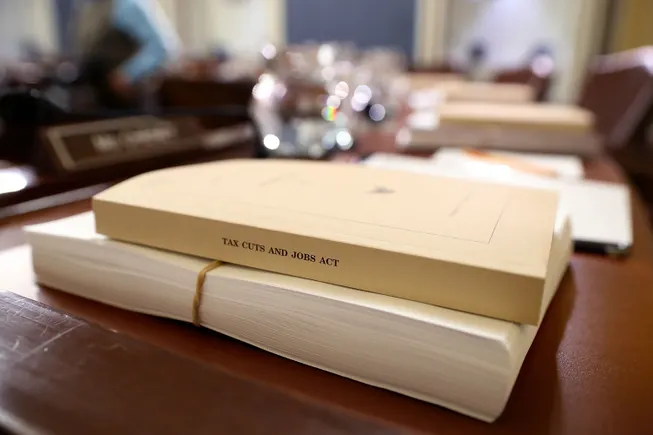
The comprehensive overhaul of U.S. tax law six years ago saved large pharmaceutical companies billions of dollars and reshaped how they profit from highly lucrative drug patents held overseas. Now, new policy developments may further prompt drugmakers to adjust their international business structures.
Driven by economic policy groups, industrialized nations are seeking to implement a global minimum corporate tax rate of about 15% to end the "race to the bottom"—a competition that in recent years has allowed multinational companies such as Pfizer, AbbVie, and Eli Lilly to enjoy effective tax rates in the single digits or even lower.
However, the United States has lagged in implementing the new rules, with some countries set to begin enforcement next January. According to a report released by the U.S. Senate Finance Committee,analysisif the U.S. does not follow suit, the Treasury could lose $39 billion over five years.
For drugmakers, this international agreement may not allow U.S. research and development tax credits to count toward the minimum tax rate, thereby increasing their tax burden and forcing them to reconsider where they locate their laboratories.
"There is a broad range of uncertainty," said Daniel Bunn, CEO of the Tax Foundation, a policy research organization.
The legacy of the "territorial tax system"
The Tax Cuts and Jobs Act (TCJA) of 2017 was the first major overhaul of U.S. tax law since 2001. After its implementation, the effective tax rates of major U.S. drugmakers dropped significantly, and their actual tax payments, after declining for several years, rebounded to 2016 levels last year.
The TCJA made several adjustments to reduce the tax burden on large corporations, most notably cutting the corporate tax rate from 35%, the highest globally, to 21%. (President Joe Biden has repeatedly attempted to raise the rateto 28%but was rejected by Congress each time.)
The TCJA also changed how the U.S. taxes profits from overseas subsidiaries, encouraging profit repatriation through lower rates and incentivizing companies to bring some overseas operations back to the U.S. Ultimately, the new tax system sought to shift the U.S. toward a "territorial" taxation system—where companies primarily pay taxes in the countries where profits are earned.
AbbVie, Pfizer, and Regeneron particularly benefited from the act, with significantly lower tax burdens. In 2018, the first full year after the TCJA, AbbVie and Pfizer received refunds exceeding their tax payments, while Regeneron's tax expenses were cut by nearly three-quarters.
The act's encouragement of profit repatriation also spurred large-scale spending. For example, in January 2018,AbbVie announceda $2.5 billion capital project investment in the U.S., a one-time charitable donation of $350 million, and accelerated pension funding of $750 million. Weeks later, the company also announced a$10 billion stock buyback programas part of a larger financial commitment to shareholders.
"Under the TCJA, low effective tax rates became even lower, payments to the U.S. Treasury decreased, and the volume of imported drugs increased," said Brad Setser, senior fellow at the Council on Foreign Relations.
Targeting tax arbitrage
The tax architecture established by the TCJA could be undermined by international efforts to impose a 15% global minimum corporate tax.
In the past, companies relying on intellectual property for profits often placed patents in subsidiaries in low-tax countries, reducing overall tax burdens by reporting profits in low-tax jurisdictions. This practice also further reduced profits reported in the U.S., as U.S. parent companies sometimes paid deductible royalty fees to low-tax subsidiaries. In contrast, industries such as manufacturing, which depend on capital investment and are difficult to relocate, were at a relative disadvantage in this tax arbitrage game.
After years of negotiations, the Organisation for Economic Co-operation and Development (OECD), an intergovernmental organization of 38 high-income countries, in March 2022unveiled a planaimed at addressing "base erosion and profit shifting." In addition to seeking a 15% minimum tax rate, the OECD also proposed a set of rules to ensure no country's tax rate falls below this level and to allow other countries to increase taxes when a counterpart fails to maintain the minimum rate.
Many countries in Europe and the Asia-Pacific region have alreadyimplemented or advancedthe minimum tax rules known as "Pillar Two," with some set to take effect on January 1 of next year. In the U.S., however, the outlook remains unclear, as Congress and the White House may not reach an agreement on relevant proposals until 2025 at the earliest.
According to the Joint Committee on Taxationanalysisthe global implementation of Pillar Two would result in tax losses for the U.S. The key point is that if the rest of the world implements it and the U.S. does not follow, the losses would be greater—$39 billion over five years—compared to only $7 billion if the U.S. implements it simultaneously.
This difference is crucial in negotiations over budget, tax, and spending packages, because undercongressional rulesincreased spending and tax cuts must be offset by cuts in other expenditures or increases in revenue.
Impact on the pharmaceutical industry
There is also good news for U.S. pharmaceutical companies: the TCJA's mechanism for taxing overseas intellectual property profits—Global Intangible Low-Taxed Income (GILTI)—can be credited against the 15% minimum tax in other countries.
But on the downside, U.S. tax incentives encouraging private-sector R&D may be at a disadvantage. Pillar Two rules do not penalize refundable tax credits and subsidies, but the U.S. R&D tax credit—which allows companies to reduce income tax based on R&D spending—is a "non-refundable" tax credit that is not permitted.
This means that if R&D credits push a U.S. drugmaker's effective tax rate below 15%, other countries could use the "Undertaxed Profits Rule" (UTPR) to raise taxes on that company to make up the difference. As a result, companies with substantial R&D operations in the U.S. may reconsider their investments.
"Because of how the OECD treats the U.S. R&D tax credit, countries implementing the Undertaxed Profits Rule can collect more taxes, which is detrimental to the U.S. tax base," said Anne Gordon, vice president of international tax policy at the National Foreign Trade Council. "At some point, companies may reconsider which countries they conduct R&D in."
Critics of the Pillar Two plan and opponents of the Biden administration's negotiations with the OECD have seized on this provision.
"In other words, the high priests of the OECD have condemned tax competition but blessed government subsidies," said Senator Mike Crapo, the senior Republican on the Senate Finance Committee, at a Mayhearingon pharmaceutical taxation. "The global tax rules create a more intense 'race to the bottom'—a competition for more subsidies for industries favored by governments."
A spokesperson for the Pharmaceutical Research and Manufacturers of America (PhRMA) said the lobbying group does not engage in tax issues. The Biotechnology Innovation Organization (BIO) did not respond to BioPharma Dive's request for comment.
Looking ahead to congressional action
Despite the headache over R&D tax credits, experts believe the TCJA's encouragement for U.S. drugmakers to keep more taxable assets domestically presents opportunities.
By lowering the U.S. corporate tax rate and shifting to a territorial system, the TCJA leveled the playing field to some extent, but it may not yet have prompted a significant return of business activity to the U.S., Bunn said.
"For over three decades, companies used various structures to avoid the high U.S. corporate tax rate," he said. "During that period, companies accumulated numerous overseas footholds. The 2017 tax law changes could not immediately eradicate these structures."
If U.S. tax law moves closer to Pillar Two principles, it could further alter incentives. "U.S. companies would prefer to pay top-up taxes in the simplest way. Companies may want to pay taxes in as few jurisdictions as possible to simplify taxation," Bunn said.
Setser also sees this as an opportunity to push drugmakers to keep taxable assets in the U.S., especially when combined with other laws. "Once companies basically pay a 15% rate no matter where they are, I think measures can be taken to make it harder for them to transfer intellectual property overseas," he said.
Ahead of the 2024 election, major changes to U.S. tax law are unlikely. However, some provisions of the TCJA will expire in 2025, prompting Congress and the White House to pass new tax and budget packages, at which point the U.S. stance on Pillar Two may become clearer.
"I think Congress has time to consider what options we can choose to strengthen the incentives we are trying to shape," Bunn said.