
A Mission Under the Shadow of Family Heart Disease: Sek Kathiresan and One-Time Gene Therapy
Sekar Kathiresan's older brother died prematurely from heart disease, which drove him into the study of heart disease genetics and led him to found Verve Therapeutics, aiming to use gene-editing technology to develop a one-time drug to prevent heart disease. This article reviews his upbringing, scientific breakthroughs, and entrepreneurial journey.
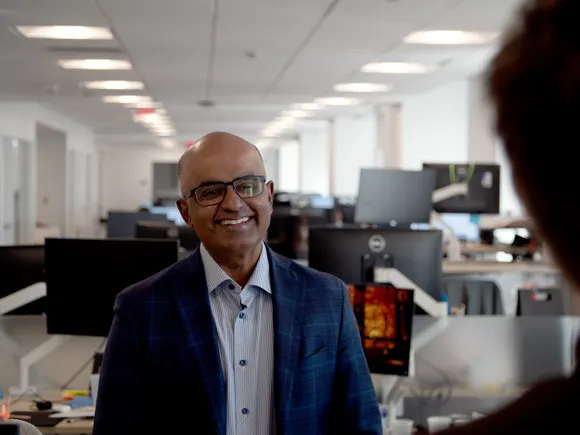
Sekar Kathiresan was driving home when he received a call from his father. It was the evening of September 12, 2012, coinciding with his father's 65th birthday, but the call was not to offer birthday wishes.
"Senthil collapsed at home," his father said. "He's in the hospital."
Senthil was Kathiresan's older brother, 42 years old, seemingly healthy, and training for a race. That evening, after returning from a run, he felt dizzy and was sweating profusely. He called 911, and by the time paramedics arrived, he was having a seizure. Senthil had suffered a heart attack, his brain was deprived of oxygen for several minutes, and he died just over a week later.
His brother's death devastated Kathiresan. He and his brother had been raised by their grandparents in the small South Indian town of Viramathi during their early years, while their parents pursued studies in the United States. The brothers communicated with their parents through letters until they were finally reunited in America years later. "We relied on each other," Kathiresan said. Both brothers had successful careers in the U.S., married in the same year, and each had young children.
Heart disease is the leading cause of death worldwide, and countless families have experienced this. But for Kathiresan, it was not just a personal tragedy—he was already a cardiologist and was rising as a top geneticist in the field.
"This deeply shook Sek, and it shook all of us," said David Altshuler, a former Broad Institute geneticist, executive at Vertex Pharmaceuticals, and Kathiresan's mentor. "It was a tragic irony."
Kathiresan channeled his grief into determination, reaching the pinnacle of academia and changing how people understand heart disease. He founded Verve Therapeutics with the goal of preventing heart disease for a lifetime with a single treatment. Nearly a decade after his brother's death, the company is about to test this therapy in humans.
"I tried to turn that negative energy into Verve," Kathiresan said, "to ensure that what happened to Senthil doesn't happen to anyone else."
The road ahead remains difficult. Kathiresan is a scholar-turned-CEO, not an experienced biotech executive. His company is attempting a scientific moonshot: using cutting-edge but not yet fully proven gene-editing technology to develop a one-time drug for one of the most common diseases. He must prove that the world needs a version of cholesterol-lowering drugs that is essentially more durable than existing ones.
"The bar is quite high to say that gene editing can play a significant role here," said Richard Lifton, president of Rockefeller University and a heart disease genetics expert. "But on the other hand," he added, such a drug "could last a lifetime."
When Kathiresan was four years old, his life's trajectory was completely altered. His father received a full scholarship to the University of Pittsburgh and went to the United States. In 1975, his father brought his wife, young daughter Davi, and about $40 to America, while Sek and Senthil remained in India. Kathiresan remembers the loss and the "longing." For five years, he had no face-to-face meetings or phone calls with his parents, only communicating through transatlantic letters. "I'm not sure I would have the courage to leave my children behind," he reflected on his father's decision.
But the plan worked. His father earned his PhD, saved enough money, and brought his sons to the United States. Kathiresan vividly remembers the flight from Mumbai to New York; the brothers had never seen an airplane and were looked after by flight attendants. His father picked them up at the airport, and they had their first meal in America at McDonald's. Kathiresan ate french fries for the first time, wolfed them down, and asked for more. His father said, "We can't afford a second order."
The family soon moved to a house outside Pittsburgh. The brothers spent half their childhood in a small Indian town without running water and the other half in a predominantly white, middle-class American suburb—a dual upbringing that each struggled with in his own way. Kathiresan was one of the few people of color at his school. He made friends but felt uncomfortable, oscillating between praying at the Hindu temple and playing weekend football. His mother worried they were "becoming too American" and urged them to remember their traditions.
Kathiresan fell in love and married during college, while Senthil had an arranged marriage. "We respected each other's choices," he said. "Some immigrants want to fully assimilate, while others want to preserve as much of their home culture as possible."
Kathiresan majored in history and considered finance, but ultimately chose medicine because "it provided a sense of purpose and mission." His career choice also stemmed from personal experience: his uncle (a doctor) and grandmother both died of heart disease, and his father had a heart attack at age 54. This solidified his determination to become a cardiologist.
During his residency at Massachusetts General Hospital, he did not shy away from hardship. Even after being accidentally stuck by a needle from an HIV patient, he briefly panicked, took antiviral medication, and returned to work. "It's part of the job," he said. "You're teaching, you're helping others, but there's always risk."
Kathiresan was not satisfied with just being a doctor; he wanted to understand why his closest relatives got sick and find ways to intervene.
One morning in 2000, David Altshuler heard a knock on his office door at MGH. At the time, Altshuler was already a leading geneticist; his lab would soon co-lead large projects like the 1000 Genomes Project and help create the Broad Institute. A young Kathiresan, still in scrubs with dark circles under his eyes, had just finished a night shift and rushed into the office: "I want to figure out what causes people to have premature heart attacks." Altshuler asked, "What do you plan to do?" Kathiresan outlined his plan: first identify risk factors for heart disease, then determine which truly matter, and finally intervene before the disease occurs. "I need to learn genetics," he said. "That's why I'm here."
Altshuler was impressed: "He was very charismatic and clearly highly motivated." Three years later, Kathiresan completed his doctoral training and joined Altshuler's team at the Broad Institute. It was an intensive course in genetics. Altshuler pushed him to study important scientific questions and taught him how to manage talent. Kathiresan said, "His influence on me was immeasurable."
Over the next decade, the two collaborated on research into the genetic markers of heart disease and became close friends. Kathiresan grew into "the world's leading researcher in coronary artery disease genetics, at least among his generation," Altshuler said. "Many people can talk a good game, but Sek is the real deal. He reminds us why we do this."
In 2008, Kathiresan established a lab at MGH and the Broad Institute to search for genetic clues to heart disease. As a new lab head, he had to convince others to believe in him. Kiran Musunuru was one of the first to join. This young cardiologist was disillusioned with cardiology at the time, believing genetic research was key, so he joined Kathiresan's lab. "He was as fully committed as I was," Musunuru said. "You have to take some risks."
The two were highly productive together, studying the genetic basis of cholesterol and protective genes like ANGPTL3, which later became a hot target for drug companies, including Verve years later. Kathiresan's lab trained over 60 young scientists, many of whom have become professors. He also overturned a long-held belief.
For years, Ethan Weiss, a cardiologist at the University of California, San Francisco, told patients to raise their "good cholesterol" levels through exercise. The medical community widely believed that high levels of high-density lipoprotein (HDL) were associated with fewer heart attacks. But researchers knew little about the relationship between HDL and triglycerides. Lifton said, "The question is which one is driving? Which one confers risk? It's hard to disentangle."
Despite insufficient evidence, drug companies believed raising HDL could prevent heart disease and developed CETP inhibitors. But Kathiresan said, "Correlation is not causation." In 2012, his lab studied the genes of over 100,000 people, separating the effects of triglycerides and HDL, and found that people with high HDL were not safer. HDL seemed to be a mirage; its association with heart disease might be confounded by other factors. The team published a paper in The Lancet suggesting that drugs raising HDL might not prevent heart disease.
This finding shocked the cardiology community. "He basically changed a paradigm we had held for a long time," Weiss said, who now tells patients to ignore HDL levels. The pharmaceutical industry was also affected; CETP inhibitors from Roche, Amgen, Merck, and Eli Lilly failed or were abandoned.
Just months after the paper was published, Kathiresan's brother died of premature heart disease. He took time off to grieve, checked his own health, exercised actively, and lost weight. "You mourn," Kathiresan said, then "focus on what you can control."
He continued his research, discovering more genes associated with risk or protection against premature heart disease, and used British genetic data to develop a polygenic risk score test that could identify seemingly healthy people at risk for coronary artery disease, diabetes, and more. "He decided to double down," Altshuler said. "That takes courage."
In 2018, Kathiresan received the Curt Stern Award from the American Society of Human Genetics, an award Altshuler had also received. In his acceptance speech, he reflected on his journey from a small Indian town to the San Diego podium, showing a 911 record: the ECG, cholesterol levels, family history, and death of a 42-year-old male who had a heart attack. He explained the work his team had done to understand similar experiences of millions. "The patient was my brother," he said, and new drugs were needed to prevent such tragedies, and he was working on it.
In January 2016, the American Heart Association (AHA), AstraZeneca, and Verily, Google's life sciences division, launched the "One Brave Idea" competition, promising $75 million to the best idea to cure heart disease. The AHA received 349 applications from 22 countries. Kathiresan and Musunuru each submitted proposals without knowing the other's, but their ideas were nearly identical: using gene-editing drugs to lower "bad cholesterol" LDL to a minimum and maintain it long-term in a single treatment. Kathiresan collaborated with Anthony Philippakis and Feng Zhang; Musunuru's team included James Wilson. The two proposals were "strikingly similar, almost interchangeable," Musunuru said. But neither made it to the finals; the award went to Calum MacRae's team. Kathiresan said, "I was extremely disappointed." Musunuru called it "a major miss by the AHA."
After that, Kathiresan decided to change careers. He had previously declined industry offers, but Altshuler's departure from the Broad Institute to Vertex in 2015 showed him a larger world. He approached Philippakis, who worked at GV and was familiar with biotech business. The two met every Friday to discuss intellectual property, types of gene-editing drugs, business plans, financing, etc., and conceived Endcadia Therapeutics, preparing to pitch it to GV.
GV's Krishna Yeshwant had heard many similar stories but thought Kathiresan's plan was feasible. If successful, it would "change how society operates." GV led a $59 million funding round, and Verve became GV's first incubated pharmaceutical company. Kathiresan weighed the decision and chose to become CEO, despite his lack of experience, but he was willing to learn and had experienced executives around him like Andrew Ashe and Andrew Bellinger.
Verve has grown from a startup to a public company with over 100 employees and a market value of nearly $2 billion. During the pandemic, Kathiresan led the creation of a COVID-19 testing protocol adopted by dozens of Boston biotech companies. The company has not missed any development milestones.


