
Spinal Muscular Atrophy: From No Treatment to Three Options, Patients Face Difficult Choices
Over the past five years, three therapies for spinal muscular atrophy (SMA) have been approved sequentially, completely transforming the treatment outlook for this rare neuromuscular disease. From one-time gene therapy to intrathecal injections and oral medications requiring long-term maintenance, each option has its own advantages and disadvantages in terms of efficacy, convenience, and cost. However, due to the lack of directly comparative clinical data, patients and physicians still face many uncertainties regarding 'how to choose.'
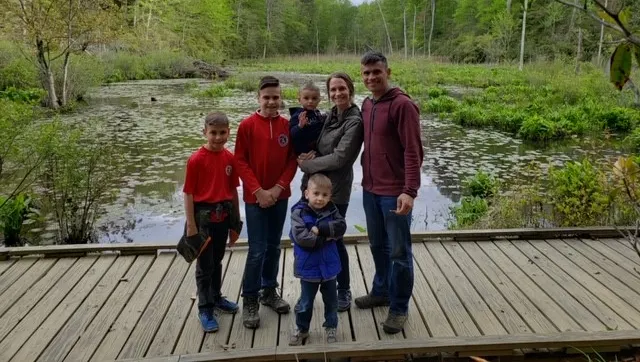
When Jud Broadhurst first noticed something wrong with his body at age 14, he didn't realize the problem was rooted in his genes. As a competitive soccer player, he often fell "for no reason." He was diagnosed with spinal muscular atrophy (SMA)—a rare neuromuscular disease that causes progressive muscle weakness.
At that time, there were no drugs that could slow the progression of the disease. Doctors predicted he would be in a wheelchair by age 20, but Broadhurst vowed to defy that prediction through a lifelong commitment to healthy eating and exercise.
Thirty years later, the treatment landscape for SMA patients has fundamentally changed. Broadhurst, now 46 and still able to walk, decided earlier this year to receive his first infusion of Biogen's Spinraza. "I'm willing to try anything humanly possible to avoid ending up in a wheelchair," he said in an interview.
Since 2016, three drugs have been approved to slow or halt the disease's progression, covering a range from the most severe "type 1" SMA, which typically causes death before age two, to milder forms that may affect walking or swallowing—the type Broadhurst has.
The three drugs work through fundamentally different mechanisms. Novartis's gene therapy Zolgensma is a one-time treatment designed to provide long-term benefit; Biogen's Spinraza is an RNA-based drug requiring several intrathecal infusions per year at a clinic; Roche's Evrysdi is an oral medication taken daily at home. These drugs have completely transformed expectations for patients, families, and treating physicians.
"Seeing children with type 1 SMA able to walk is simply incredible," marveled Elizabeth Kichula, a pediatric neurologist at Children's Hospital of Philadelphia.
However, having three drugs with vastly different mechanisms available simultaneously has also left Kichula, Broadhurst, and others in the SMA community facing a difficult choice—they lack sufficient information to make decisions. Patients must weigh the cost and relative convenience of each therapy without knowing which is most effective. The three drugs have never been compared head-to-head, and their long-term benefits are still being studied.
"The tricky part is that there are still many unknowns," said Rebecca Scharf, a pediatric neurologist at the University of Virginia.
For the companies producing these three drugs, these unknowns and how patients actually respond will largely determine whether their therapies gain widespread adoption.
How to choose the right treatment
All three drugs can be used in infants under two years old, making each a potential option for the most common and fatal type 1 SMA. But only Spinraza and Evrysdi are approved for older patients—primarily those with milder type 2 and type 3. According to the nonprofit SMA Foundation, these two groups account for 88% of the SMA patient population.
However, each drug has its own advantages and limitations.
As a gene therapy, Zolgensma aims to permanently alter the course of the disease with a single treatment. But since the longest patient follow-up to date is only six years, families find it difficult to determine whether it can be considered a "cure" or to rule out potential long-term safety issues. Additionally, Zolgensma costs $2.1 million for a single treatment, making it the most expensive drug per dose in the world.
In contrast, Spinraza and Evrysdi are long-term maintenance therapies. Biogen's drug is administered via intrathecal injection, costing $125,000 per dose, with patients receiving six infusions in the first year and three annually thereafter. Roche's oral liquid formulation is taken once daily, with an annual cost cap of $340,000, and the actual price is tied to patient weight.
The considerations for different patients facing treatment choices also vary.

Cheryl Yoder's son Jase is now five years old. He participated in a Spinraza clinical trial as an infant and has been receiving infusions since he was one month old. On a recent trip to the hospital, "I prayed to God that we wouldn't have to keep making this trip. If there were a one-time therapy, that would be fantastic," she said.
However, Jase is now too old for Zolgensma.
The "intrathecal" injection used for Spinraza (i.e., a lumbar puncture) is an invasive procedure that must be performed under supervision at a specialized medical facility, typically requiring local anesthesia and in some cases general anesthesia. For patients of different ages or physical conditions, this injection can range from merely uncomfortable to a barrier to treatment.
For infants and young children, repeated sedation and anesthesia can be concerning because the potential long-term effects on the developing brain are not yet clear. Additionally, some young children need to pause school before Spinraza infusions to avoid upper respiratory infections—which can increase the risk of general anesthesia.
Adult patients receiving Spinraza have relatively fewer concerns.
Broadhurst, who flies from his home in Colorado to Phoenix for Spinraza treatments, doesn't find the spinal injections too burdensome. He has experienced a dull, throbbing headache twice after injections. "The infusion itself takes at most five minutes," he said. "Occasionally the needle hits a nerve, and it feels like being struck by lightning."
Janelle Fiesta, now 24, was diagnosed at age one. Due to the disease, she underwent spinal fusion surgery and has a metal rod implanted in her back.
She started Spinraza treatment a year ago, and each infusion requires a visit to the hospital's radiology department so doctors can access her spinal canal. Although the procedure can be painful, "most of the time the treatment goes very smoothly, and the doctor can complete it without any obstacles," she said.
A huge commercial market
It is these differences that lead analysts covering Novartis and Biogen to generally expect Zolgensma to become the preferred treatment for most SMA infants, while Spinraza is favored by adult patients. However, after Evrysdi was approved in August, some analysts turned cautious on Spinraza's prospects—the drug is Biogen's core product, with sales of $2.1 billion last year.
Salim Syed, an analyst at Mizuho Securities USA, predicted last month that Spinraza sales could decline by $700 million annually by the mid-2020s due to competitive pressures.
Competition appears to already be affecting Spinraza usage. Roche said in September that two-thirds of patients starting Evrysdi had previously used Biogen's drug or Zolgensma.
Although oral administration seems more convenient than Spinraza, the reality is more complex. Evrysdi requires preparation before use, and pediatric doses are calculated based on body weight. This makes the treatment process less straightforward than taking a regular pill or capsule.
Additionally, patients may be reluctant to stop a medication they believe is working.

Since starting Spinraza, Fiesta says she can now sit up straight without toppling over, lift heavier objects, and breathe more deeply than before treatment. Although she is curious about Evrysdi and the prospect of avoiding hospital trips, she has no plans to switch in the near term. "I'm currently on Spinraza and feel I'm benefiting from it," she said.
Broadhurst says he feels comfortable with Spinraza because he worries about the effectiveness of oral medications. "Nothing is more precise than injecting directly into the spinal fluid," he said.
In review documents released after Evrysdi's approval, the U.S. Food and Drug Administration (FDA) described the effects observed in type 2 and type 3 patient trials as "relatively modest," noting that the statistically significant benefits in motor function were primarily driven by data from several study sites in Poland.
Brian Abrahams, an analyst at RBC Capital Markets, wrote in a September client note that if physicians view Evrysdi's data the same way, its adoption among milder patients could be limited.
On the other hand, Kichula of Children's Hospital of Philadelphia noted that if older type 2 or type 3 patients have concerns about Spinraza's intrathecal administration, Evrysdi might win over this group. "When you're dealing with young adults or adults, they care more about quality of life," she said. If there are "fewer uncomfortable procedures," she added, they might accept a drug with relatively modest benefits.
Can gene therapy reach more patients?
Due to the age restriction in Zolgensma's label, the gene therapy is out of reach for Broadhurst, Fiesta, and a large number of SMA patients.
Novartis hopes to expand its indication, but this effort—which involves administering Zolgensma via intrathecal injection rather than intravenous infusion—has been halted twice by the FDA. The agency has required Novartis to conduct a new study. Even if the study succeeds, analysts expect regulatory filing for the expanded indication to take at least two more years.
Nevertheless, Zolgensma could still benefit these patients in the coming years, which might prompt them to reconsider their treatment choices. While many patients favor the idea of a "one-time cure," they have concerns about the long-term effects and potential side effects of a treatment that is essentially irreversible and extremely expensive.
"If they put such a high price tag on it and claim it's a single dose, then they really should know whether that's true," Yoder said. "But the research hasn't been long enough to draw that conclusion."
While acknowledging Zolgensma's potential, doctors are also cautious, partly due to ongoing concerns about reactions to the engineered virus used to deliver the therapy. Scharf of the University of Virginia noted that she has seen children experience "very high" spikes in liver enzyme levels after treatment, suggesting a potential risk of liver damage.
"There is still so much we don't know about the very long-term course of gene therapy," she said. "So that's another issue that requires careful thought."
All these factors could make Biogen's drug—the most established of the three available options—more durable among patients than previously expected.
Jase Yoder has been on Spinraza for four years now. His mother says he now enjoys riding a bike and running—something unimaginable for a type 1 SMA infant in the past.
"He's not as strong as his peers. Honestly, they can easily outrun him," she said. "But in his mind, he thinks he can run fast."