
Can Vaccines End the COVID-19 Pandemic? Global Distribution Faces Challenges
Progress has been made in COVID-19 vaccine development, but global production capacity is concentrated in a few wealthy countries, sparking concerns about 'vaccine nationalism.' Companies like Moderna and Pfizer have pledged to expand supply, the US government insists on putting its own country first, and international organizations call for multilateral coordination. This article analyzes production capacity distribution, political maneuvering, and distribution challenges, pointing out that equitable vaccine access still requires international cooperation.
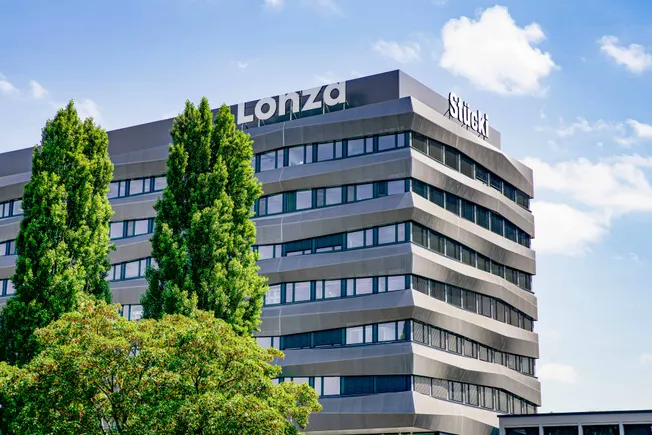
The town of Visp in Switzerland's Rhone Valley is home to one of the world's largest pharmaceutical plants, owned and operated by contract manufacturer Lonza. The plant is one of several sites that will produce Moderna's experimental COVID-19 vaccine, based in Cambridge, Massachusetts. Moderna's vaccine has entered mid-stage clinical trials and is one of the fastest-progressing candidate vaccines globally; Lonza's manufacturing capacity is crucial to ensuring adequate supply.
Switzerland has a population of only 8.5 million, and this geographic location may offer an additional advantage—when limited supply triggers competition among governments, the population size of the production site will influence distribution strategies. Moderna CEO Stéphane Bancel said during an online conference hosted by the drug industry trade group BIO: "From a population perspective, Switzerland is a small country. If you produce 500 to 600 million doses in Switzerland, the likelihood that all those doses are kept for the Swiss people is very small."
The global race to develop a COVID-19 vaccine has spawnedmore than 160 experimental candidate vaccines, which are preparing to enter or are already in human testing stages. Research spans laboratories in more than 20 countries, but once a vaccine is proven safe and effective, production will be concentrated mainly in wealthier Western nations as well as China and India, raising questions about equitable distribution and access. This concentration of manufacturing capacity may push countries toward "vaccine nationalism," prioritizing the protection of their own citizens regardless of who funded the research.
This dynamic could spark a scramble among the wealthiest nations, delaying vaccination of vulnerable populations in low- and middle-income countries—a concern thatbecame a reality during the 2009 flu pandemic. That year, the United States and Europe were hardest hit, whereas now Brazil, India, Chile, and Mexico have become global hotspots.
Leading COVID-19 vaccine candidates are mostly produced in the U.S. and Europe
Select vaccine developers
Show all▼- Show all
- Moderna
- CanSino Biologics
- Inovio
- BioNTech/Pfizer
- University of Oxford/AstraZeneca
- Novavax
- Johnson & Johnson
- Sanofi/GlaxoSmithKline
Tensions could further escalate if leading projects backed by hundreds of millions of dollars in government funding fail in testing—scientists are attempting to compress years of work into months, and the risk of failure is real. Pfizer CEO Albert Bourla said on a May 28 conference call: "Every country's government wants to secure the vaccine for its own people." He added: "Despite discussions at the World Health Organization, the reality is that governments will use every lever to be among the first to obtain vaccines. Pharmaceutical companies may find themselves caught in the middle."
Overall, the wealthiest nations and major pharmaceutical companies have emphasized the need for equitable distribution. But when a country has hundreds of thousands or even millions of infections, these commitments may be set aside. Friction has already emerged:The U.S. reportedly attempted to acquire German vaccine developer CureVac, andthe CEO of France's Sanofi once said the first doses of its vaccine would be prioritized for the U.S., remarks he hastily retracted afterward.

Katherine Bliss, a senior fellow at the Center for Strategic and International Studies (CSIS) and former State Department health policy expert, noted: "U.S. global health security policy states that the U.S. will help other countries improve their immunization capacity because the U.S. recognizes that it is only healthy when the least healthy people in other countries are healthy." Bliss said in an interview: "But amid heated political discourse, this is easy to forget."
However, the Trump administration has signaled that vaccine doses funded by U.S. taxpayers will be prioritized for Americans. A senior administration official said on a recent press call: "Let's take care of Americans first. If there's surplus, we're interested in ensuring people around the world can be vaccinated." The U.S. has fundedModerna、Johnson & Johnson、Merck & Co.、SanofiandAstraZeneca's vaccine development efforts, with AstraZeneca committing to supply 300 million doses to the U.S. starting in October. But the senior official denied that U.S. agreements with pharmaceutical companies would exclude other countries from obtaining vaccines: "We are in no way hindering global access."
Leading COVID-19 vaccine developers have collectively committed to producing about 6 billion doses by the end of next year, which on the surface seems sufficient. However, testing does not always succeed, and the unprecedented timelines set by pharmaceutical companies may introduce new risks. Supply of a successful vaccine will not arrive all at once, and few companies have yet determined the expected optimal dose, complicating production forecasts. Non-governmental organizations organizing the international pandemic response acknowledge the potential dangers of nationalist attitudes. A spokesperson for the Coalition for Epidemic Preparedness Innovations (CEPI) wrote in an email to BioPharma Dive: "This is a risk we are aware of, but we cannot solve it alone. It requires a political solution. We plan to mitigate by expanding production to facilities in multiple jurisdictions."
AstraZeneca has already adopted this strategy, havingsigned agreementswith CEPI and Gavi, the Vaccine Alliance, and separately partnered with the Serum Institute of India to build a supply chain for the University of Oxford's vaccine targeting low- and middle-income countries. Together, these agreements aim to ultimately deliver 1.3 billion doses. Other companies may follow suit, outsourcing vaccine production to local firms. Gilead has set a precedent by licensing its COVID-19 drug remdesivir to nine generic manufacturers in Egypt, India, and Pakistan for distribution to 127 countries. Additionally, Bangladeshi manufacturer Beximco has begun producing a generic version of remdesivir under a patent waiver under World Trade Organization rules—another pathway for vaccine production outside major participating countries.
CSIS's Bliss noted that existing production capacity in India, Brazil, and South Korea could help supply low-income countries through licensing or patent waivers. Even if companies and governments can piece together enough factory space to produce vaccines globally, supplies of critical components such as glass vials and syringes could become tight, risking a repeat of the scramble for masks and ventilators. International cooperation is essential to ensuring low- and middle-income countries gain access to vaccines. Bliss said: "Diseases do not stop at borders. If we want to revive our societies and economies, restoring the trade, travel, and other activities that have driven international engagement over the past three decades, we must recognize the necessity of global vaccine access."
Ned Pagliarulo contributed reporting to this article.