
Shift in Antitrust Regulation: Pharmaceutical M&A Scrutiny Tightens
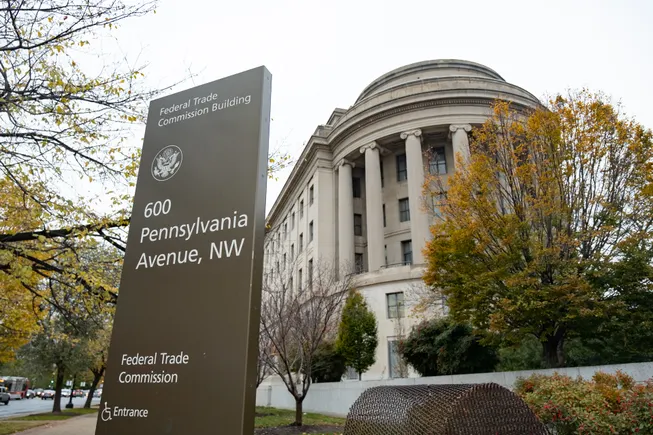
The U.S. Federal Trade Commission (FTC) and regulators in Europe, the UK, and Canada announced in March that they would reassess how pharmaceutical mergers are reviewed, particularly targeting major deals such as Bristol-Myers Squibb's acquisition of Celgene and AbbVie's acquisition of Allergan. Experts expect regulators to pay greater attention to the potential impact of mergers on drug prices, innovation, and the competitive landscape. Although the industry has yet to see a significant impact, the risk is already viewed as a "credible threat."
Executives in the biotechnology and pharmaceutical industries often view mergers and acquisitions as a lifeline for the industry, believing that acquisitions can fill research pipelines, promote competition, and incentivize investors to fund innovative startups. However, opponents of pharmaceuticals have raised objections, and now their arguments may have gained strong support from global antitrust regulators.
In March, the U.S. Federal Trade Commission (FTC) and its European, British, and Canadian counterpartsannouncedthat they would reassess how they review pharmaceutical company deals, specifically mentioning two recent multi-billion-dollar acquisitions: Bristol-Myers Squibb's acquisition ofCelgene, and AbbVie's acquisition ofAllergan。
FTC Acting Chair Rebecca Kelly Slaughter did not elaborate on how regulatory views might change. However, antitrust experts expect regulators to examine whether large companies use their broader drug portfolios to force insurers to accept higher prices, and how acquisitions may suppress innovation by hindering competition.
"This is a fairly clear signal that the green light is no longer on," said antitrust lawyer David Balto, who represented unions and consumer groups in opposing the Allergan deal. "Now the signal is yellow or red, and companies need to be more cautious about the deals they consider."
Illumina, the dominant supplier of DNA sequencing in the U.S., has experienced this firsthand, as the FTC and the European Commission recently challenged its proposed acquisition of emerging competitor Grail.
The biotechnology and pharmaceutical industries have taken note, although there has been no obvious impact on investment or M&A activity. For example, in April, U.S. regulators approved AstraZeneca's $39 billion acquisition of rare disease drug maker Alexion.
"We have to view it as a credible threat," said Bruce Booth, a partner at venture capital firm Atlas Ventures. "But as a negative risk, it has not yet been priced into the financing space."
"A broader approach"
Currently, the FTC focuses on overlaps between marketed drugs of merging companies or between marketed drugs and drugs in development. The FTC typically accepts divestitures of marketed drugs to resolve its concerns.
This may no longer apply in the future. "Going forward, I hope the Commission takes a broader approach to analyzing the full competitive consequences of pharmaceutical mergers," Slaughter wrote in herdissenting statementregarding the approval of the Bristol-Myers Squibb-Celgene acquisition.
"I urge not only the Commission but also researchers and industry experts to conduct thoughtful and creative research on these cases, particularly studying the impact of recent completed mergers on drug research, development, and approval," she added.
Through a spokesperson, Slaughter declined to comment for this article.
If Joe Biden had not been elected president, the FTC's reassessment of pharmaceutical mergers might not have occurred. FTC Chairman Joseph Simons, appointed by Donald Trump, stepped down on January 29, and Biden appointed Columbia University professor Lina Khan—a critic of concentration among big tech companies—to replace Simons, giving Democrats a 3-2 majority.
Biden also has the opportunity to nominate a second FTC commissioner, as he has nominated Rohit Chopra—who joined Slaughter in dissenting in the AbbVie-Allergan and Bristol-Myers Squibb-Celgene cases—to serve as director of the Consumer Financial Protection Bureau. Another nomination could allow Biden to leave his mark on broader antitrust policy.
PhRMA, the powerful industry trade group, has been critical of regulators' efforts to scrutinize pharmaceutical deals, which is not surprising. "These mergers can facilitate the transfer of knowledge and expertise, thereby pushing the boundaries of scientific discovery, supporting the development of new life-saving drugs, and enhancing competition," spokesperson Brian Newell said in a statement.
But U.S. antitrust regulators have previously redefined their views on anticompetitive mergers. After the FTC lost multiple challenges to hospital mergers in the 1990s, the agency reviewed its approach and won court rulings based on stricter analysis of market composition.
Basically, the FTC narrowed what it considered the size of these markets and redefined which mergers were seen as anticompetitive, according to Balto. "This is an example of what could happen," he said.
The FTC is currently revising its view of hospital competition in another way, by assessing how mergers affectnurse wages。
Consolidation and innovation
In the case of pharmaceutical consolidation, the FTC's competitive analysis could develop in two directions: how large companies lead to higher prices for marketed drugs, and how pharmaceutical companies' acquisitions of drugs in development suppress innovation.
Previously, antitrust regulators' review of large mergers largely underestimated the likelihood that they would translate into higher drug prices, unless there were product overlaps that could potentially allow anticompetitive behavior.
But in recent years, list prices have often risen faster than inflation, leading some experts to believe that the market power of increasingly large companies allows them to pry open insurers' wallets.
Booth believes the data does not support this claim, noting that even the largest companies, such as Pfizer and Novartis, hold a very small share of the global $1.2 trillion in drug sales.
"Despite the size of the top 20 pharmaceutical giants, we are an extremely fragmented industry," he said in an interview.
According toEvaluatePharmadata, in 2019, the 10 largest pharmaceutical companies globally accounted for 42% of global prescription drug sales. Roche led with a 5.5% market share, followed by Novartis and Pfizer.
Meanwhile, regarding innovation among large pharmaceutical companies, Slaughter appears to have been influenced by the analysis of two economists—Justus Haucap of the Düsseldorf Institute for Competition Economics and Joel Stiebale. Slaughter citedtheir research。
in her dissenting statement on Bristol-Myers Squibb's acquisition of Celgene. The two scholars analyzed 65 large pharmaceutical deals reviewed by European competition authorities. These companies are headquartered in the U.S. and Europe. They found that innovative activity, measured by patents and R&D spending, declined not only for the merging companies but also for their competitors.
"Especially in the pharmaceutical sector, being first to launch a new product is very important. It's a winner-take-all or winner-takes-most market," Stiebale said in an interview. "So if you acquire one of your main competitors, the risk that someone else will overtake your research is reduced."
The remaining competitors of the merged company "appear to reduce their innovation efforts, so this strongly suggests that competition is the driving factor," he said. Stiebale and Haucap found that within four years after each deal, the analyzed companies' R&D activity was cut by more than 20%.
"Killer acquisitions"
Other economists have studied the fate of experimental drugs being developed by small biotech companies that are acquired by larger firms.
In describing "killer acquisitions," Colleen Cunningham of London Business School and Florian Ederer and Song Ma of Yale School of Managementestimatedthat if large companies have overlapping projects, drugs obtained through acquisitions of small biotech firms are slightly less likely to be advanced.
The economists calculated that about 5% to 7% of acquisitions each year fit the description of "killer acquisitions."
The FTC appeared to consider this issue in its 2019reviewof Roche's acquisition of gene therapy developer Spark Therapeutics.
The Commission considered whether the Swiss pharmaceutical company would have an incentive to abandon or delay Spark's hemophilia A gene therapy to defend the market share of its best-selling drug Hemlibra for treating the disease. Ultimately, the FTCconcludedthat because other biotech companies were developing hemophilia A gene therapies, Roche still had an incentive to develop Spark's therapy.
While the research by Cunningham and her colleagues has not yet featured prominently in the Commission's analysis, the FTC appears to be aware of these studies and cited their paper in describing its retrospective review of mergers.
Booth of Atlas Venture views acquisitions as positive, allowing research, talent, and capital to be recycled into new projects.
He also pushed back against the claim that large pharmaceutical companies often acquire firms to stifle competition. He said target companies should be able to judge whether this is likely when negotiating a sale.
"I have never heard of a pharmaceutical company acquiring something and shelving it purely for anticompetitive reasons," he added.