
First New Alzheimer's Drug Approved, Raising Questions About Eligibility and Accessibility
The U.S. FDA approved Aduhelm, the first new Alzheimer's drug in nearly 20 years, but significant disagreements remain among patients, doctors, and payers over its efficacy evidence, pricing, insurance coverage, and diagnostic capabilities.
Geri Taylor probably knows better than most people that what she is experiencing deserves attention. As a former nurse and healthcare administrator, Taylor faced Alzheimer's disease many times during her career and could recognize its early signs. She began having memory difficulties, not just minor things like forgetting where she put her keys. In 2012, a defining moment came: Taylor, then 69, looked in the mirror and did not recognize herself.
She and her husband, Jim Taylor, quickly saw a neurologist, who diagnosed her with early cognitive impairment. But it was not until they tried to enroll her in a clinical trial for an experimental drug that Geri truly learned she had Alzheimer's disease.
Much has changed in the years since. For Geri, the most obvious effect of the disease is that words now often seem "right on the tip of her tongue." She said, "I have a lot of great ideas, but in the process of organizing my words, I can't remember what those ideas are about." Meanwhile, Jim admits that compared with his wife, he has had a "more challenging" time adapting to this new normal.
Geri is one of about 6 million Americans with Alzheimer's disease. The disease progressively destroys memory, brain function, and bodily functions. Until this week, patients and their caregivers had no treatment for the disease, with only a few drugs available to help alleviate some symptoms.
But in a historic and controversial decision, the U.S. Food and Drug Administration (FDA) on Monday approved a new drug designed to slow cognitive decline caused by Alzheimer's disease, despite conflicting evidence about whether it truly works. Developed by Biogen and Eisai, the drug, now called Aduhelm, is the first new Alzheimer's treatment approved in nearly 20 years.
For the Taylors, Aduhelm has long been a source of hope. The trial Geri applied for—the one that confirmed her Alzheimer's—was an early study of Aduhelm, and Geri ultimately received the high-dose regimen later approved by the FDA.
Except for an 18-month gap between the end of that study and the start of another so-called "extension" study, Geri has received a one-hour intravenous infusion of Aduhelm every month. She believes the drug is helping her fight the disease.
"It's a lifeline," she told BioPharma Dive. "As soon as each infusion is over, I'm convinced I feel better. It's what I have, and it's all my hope."

Many patients feel the same way. However, as Aduhelm prepares to launch, questions remain about how patients will afford and access the drug. Biogen has set the annual price of Aduhelm at $56,000, which is far higher than some stakeholders expected. According to The Wall Street Journal, Cigna, one of the largest health insurers in the U.S., estimates that some eligible patients could face out-of-pocket costs of $10,000 or more per year.
"Sticker shock" could be widespread because the FDA placed few restrictions on Aduhelm's use when approving it. The Institute for Clinical and Economic Review (ICER), an influential watchdog on drug pricing, sharply criticized Biogen's pricing and the FDA for approving a drug with known safety issues but unclear benefits for such a large population.
"Alzheimer's disease has a profound impact on patients and their loved ones, and no one can be indifferent to the hopes and fears in patients' daily lives," ICER said in a statement. "But no one should assume that approving a drug with such conflicting and uncertain evidence necessarily helps patients and families."
In a conference call with analysts and in interviews with BioPharma Dive, Biogen executives defended the drug's pricing, comparing it to specialty drugs for cancer and inflammatory diseases.
"We think this price is truly fair," Chirfi Guindo, Biogen's head of global product strategy and commercialization, said in an interview. "It's sustainable, and we remain open."
More broadly, there are not enough neurologists to diagnose the potential influx of patients seeking treatment. Biogen estimates that 1 million to 2 million people may test positive for the toxic protein targeted by its drug, and some healthcare providers worry that number will overwhelm treatment centers.
"They know very well that if the drug were approved by the FDA, hundreds of thousands of patients would call clinics demanding treatment, and what a huge problem that would create," Thomas Wisniewski, director of the Center for Cognitive Neurology at NYU Langone Health, said in an interview earlier this year.
Even if there were enough specialists, one of the tests used to diagnose Alzheimer's—positron emission tomography (PET)—is expensive and often not covered by insurance. The FDA also requires patients using Aduhelm to be monitored via magnetic resonance imaging (MRI) for symptoms of the drug's more concerning side effects, which could pose another logistical challenge.
"I'm very concerned that the data do not support its use, and that even from a practical standpoint, we don't have a well-developed plan to ensure its safe use," said Mary Sano, director of the Alzheimer's Disease Research Center at Mount Sinai School of Medicine.
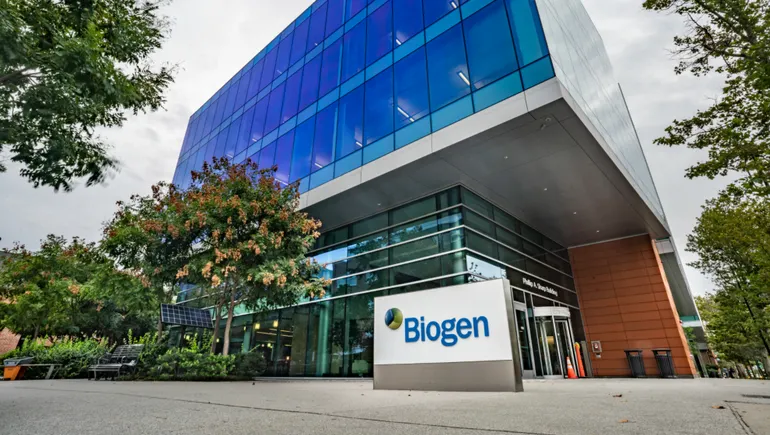
For Biogen, addressing these concerns is critical. The Cambridge, Massachusetts-based company is betting heavily on Aduhelm, hoping the first-of-its-kind Alzheimer's drug will offset problems in other parts of its business. Now with approval in hand, Biogen must overcome potential insurance and diagnostic hurdles to meet its multibillion-dollar sales expectations for Aduhelm.
The company has been preparing for Aduhelm's launch for months. Executives have planned to spend $600 million on its rollout and said in a presentation Tuesday that about 900 Alzheimer's treatment centers appear ready to use the drug.
Biogen also said it has been urging insurers to cover PET scans while running its own testing program for the key protein, known as amyloid. The company announced a partnership with CVS Health on Monday to offer cognitive screening in 14 metropolitan areas through its "Project Health" program.

The Taylors pointed out to BioPharma Dive that one advantage of participating in Biogen's study was that the required brain scans were covered by the study.
"We personally aren't worried. We assume we'll continue in the trial because they need to understand the long-term effects," Jim said. "But it is a real concern."
Another new partnership with Cigna will attempt to improve access by tying costs to how patients perform after using Aduhelm.
Biogen also claims it is working to reach underserved communities, promoting equitable access and financial assistance through other programs. Recent reporting by STAT News detailed that although Black and Hispanic populations are at higher risk for Alzheimer's and other dementias, they are much less likely to be diagnosed and subsequently receive appropriate treatment.
"The cost is really high, and I'm not even talking about the drug itself," Sano said. "Just administering it this way, and the imaging required, is very expensive."
The cost issue is even more salient given the ongoing debate over whether Aduhelm's effect on amyloid truly translates into cognitive and functional benefits.
The main clinical trial supporting Aduhelm's approval found that patients on the high dose declined about 0.4 points less on a cognitive scale compared with the placebo group. Physicians interviewed by BioPharma Dive said that to have a meaningful impact on patients' daily lives, a drug would likely need to slow cognitive decline by at least 1 to 2 points.
However, those results contrast with those of a separate identically designed trial, which showed that placebo-treated patients performed slightly better than those receiving the high dose of Aduhelm. These conflicting results, along with the way Biogen analyzed the data, led the FDA's advisory committee and the agency's own statisticians to strongly oppose approval of Aduhelm.
The FDA approved Biogen's drug anyway, which surprised many, including Michael Sherman, chief medical officer of Harvard Pilgrim, a New England-based insurer.
Sherman told BioPharma Dive before Monday's decision that unlike other drugs that could have a huge budget impact, his team had not done much modeling on Aduhelm, partly because they expected it would not be approved.
Sherman noted, however, that if approved, he would consider a price tag of $10,000 or more "expensive." The nonprofit cost watchdog ICER previously estimated that a price of $2,500 to $8,300 per year could be considered cost-effective if the drug's apparent benefit were deemed real rather than a false positive.
"If we start from the position that it shouldn't have been approved, it's hard to answer the question of what I think this drug is worth," Sherman said.