
Will Sky-High Drug Prices Prompt the US to Use Its Little-Known Patent March-In Rights?
The 2010 Fabry disease drug shortage incident once sparked discussions about the US government's 'march-in rights.' Now, as drug pricing becomes a political hot topic, this rarely used patent power is being re-examined. This article analyzes its legal basis, historical cases, and potential future applications.
In 2010, patients with Fabry disease, a rare enzyme disorder, discovered that supplies of their only treatment were being rationed. Patients taking Genzyme's drug Fabrazyme received only one-third of the normal dose, and new patients could not get the drug at all.
Why? The company's plant in Allston, Massachusetts, was contaminated with a virus.
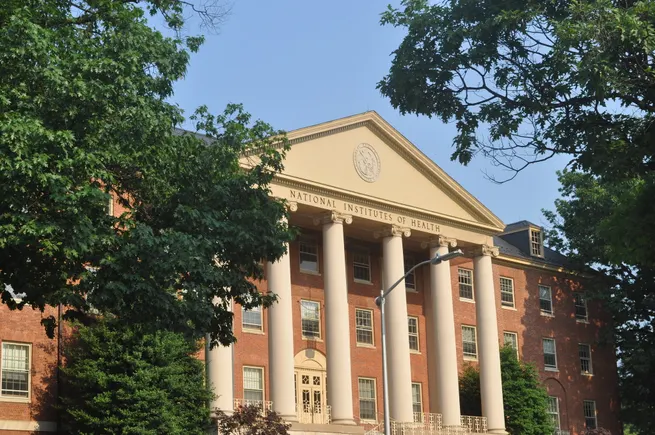
With rationed doses, patients' symptoms such as pain, high blood pressure, and vision problems returned. They petitioned the federal government to use its long-standing power to "march in," revoke Genzyme's patent, and grant it to another company that could meet the demand. The National Institutes of Health (NIH) denied the request, reasoning that although Genzyme had clearly mishandled supply, another drugmaker would need years of clinical work to catch up.
With 2020 Democratic primary candidates campaigning on lowering drug prices, "march-in rights" have re-emerged as a tool to achieve that goal. The argument is that biopharmaceutical companies overprice drugs developed with taxpayer-supported discoveries, which should prompt the government to reclaim patents to reduce costs. The Trump administration has also shown some interest in pharmaceutical patents.
This is due to growing calls related to "patent thickets"—the extensive portfolios of intellectual property that pharmaceutical companies use to protect drugs from generic competition long after the first patent expires. For example, AbbVie holds more than 100 patents for its $20 billion-a-year injectable drug Humira, allowing its monopoly to extend into 2023.
However, the problem with resorting to "march-in rights" as a solution is that the government has always refused to use the powers it holds—as the Genzyme case shows.
"Many people saw the NIH decline to intervene in that case and assumed they would never exercise these rights," said Rachel Sachs, an assistant professor of law at Washington University in St. Louis, in an interview.
"In the prescription drug context, that argument will always hold," she said of the government's response to its petition regarding Fabrazyme. "If that's always the case, then the NIH should just say outright that they will never exercise march-in rights unless a company is essentially going out of business and completely refusing to sell the drug."
A 39-year-old law
The NIH's march-in authority stems from the Government Patent Policy Act of 1980, commonly known as the Bayh-Dole Act after its congressional sponsors. Its purpose was to accelerate the transfer of patented inventions such as new drugs from government-funded research institutions to the private sector.
When a private-sector licensee fails to take steps to "alleviate health or safety needs" by using the relevant patent, the government can reclaim the license and grant it to another company.
Patient advocates have long argued that excessive drug prices should trigger march-in rights—such claims have been made in the past regarding the HIV drug Norvir, the glaucoma treatment Xalatan, and the prostate cancer treatment Xtandi. The NIH's response in each case was that drug prices do not impede access to the drug.
Of the six march-in petitions the NIH has received, four were based on price.
It also does not help that the NIH, as a research institution, holds Bayh-Dole authority, said Joshua Sharfstein, vice dean for public health practice and community engagement at Johns Hopkins University, in an interview.
"I think the NIH is concerned about creating therapies, not drug costs," said Sharfstein, who served as deputy commissioner of the Food and Drug Administration (FDA) under former President Barack Obama. "And the FDA certainly doesn't care either. They fulfill their mission by approving generics as a mechanism to lower drug costs."
"Apart from payers like the Department of Veterans Affairs, Medicare, or Medicaid, there is no agency that really considers drug costs," he said. "There is no real central authority."
The Pharmaceutical Research and Manufacturers of America (PhRMA) has long opposed the use of march-in rights, but as lawmakers seek ways to curb drug prices, the organization may find itself increasingly sidelined.
"Using never-used march-in rights to circumvent patent protections for medical innovation threatens our nation's competitiveness," said PhRMA spokesperson Tom Wilbur.
For its part, the NIH is reluctant to describe what circumstances would prompt it to exercise march-in rights, stating only in a statement that it makes decisions based on the facts presented in each petition.
A tight-knit community
The two sponsors of the act, former Senators Birch Bayh and Robert Dole, made clear in a 2002 letter to The Washington Post that "the Bayh-Dole Act did not intend for the government to set prices for products," which did not help the patient advocates' cause.
Sachs said that argument is weakened by the fact that the Bayh-Dole Act predates the Hatch-Waxman Act, which established data exclusivity and drug patent extensions. Thus, the sponsors could not have foreseen the pricing power that brand-name drug manufacturers hold today.
Past failures to get the NIH to intervene have not discouraged the activist organization Knowledge Ecology International (KEI). Its executive director, James Love, said in an interview that the organization, which has received funding from foundations such as the Open Society Foundations and the Kaiser Foundation Health Plan and Hospitals, is now preparing to file a Bayh-Dole petition regarding Novartis's gene therapy Zolgensma, priced at $2.1 million.
In preparation, KEI wants principal investigator Jerry Mendell to disclose the costs of the clinical trial conducted at Children's National Hospital. The organization has also asked how much funding came from public sources such as the NIH and charities, and which patents Children's National licensed to Avexis—which Novartis acquired to obtain Zolgensma.
Children's National Hospital said in a statement that the NIH was one of several funders of Zolgensma's preclinical research, but the federal agency did not fund the human clinical trial.
Love claims that one reason the NIH does not enforce Bayh-Dole march-in rights is the relationship among the NIH, academia, and industry, which allows discovery researchers and their intellectual property to move into startup biotech companies.
"The technology transfer community is a fairly tight-knit community. These are their colleagues. Their colleagues are doing well," he said.
Despite the NIH's past reluctance to act, Love said he is optimistic that greater pressure can soon be brought to bear on the pharmaceutical industry. This is because many new cell and gene therapies—such as the cell therapies Kymriah and Yescarta and the gene therapies Zolgensma and Luxturna—benefited from NIH funding in their early research stages.
Coincidentally, these therapies are among the most expensive drugs on the market, with Zolgensma setting a record for a single treatment.
"We would love to change the regulations, but I'm not going to sit back and say we can't do anything," he said. "There are many things you can do right now without changing the regulations."
Change on the horizon?
Lawmakers, however, have introduced bills to expand the federal government's authority over NIH-supported patents.
Senator Chris Van Hollen, a Maryland Democrat, has proposed the We Protect American Investment in Drugs Act (WE PAID Act), which would appoint a committee to assess reasonable prices for drugs developed with federal funding.
Representative Lloyd Doggett, a Texas Democrat, has proposed exercising Bayh-Dole march-in rights against any company that refuses to negotiate drug prices with Medicare.
Meanwhile, march-in rights have been proposed as a drug price control tool by Democratic presidential candidates such as Pete Buttigieg, Bernie Sanders, and Elizabeth Warren.
"If I am elected president, I will reduce the cost of prescription drugs in the United States by 50%, so that we pay no more than other major countries," Sanders said in a March interview on "Face the Nation." "If the pharmaceutical companies don't like that, then we will look at their patents."
More recently, President Donald Trump's Department of Health and Human Services sued Gilead last month, alleging infringement of patents held by the U.S. Centers for Disease Control and Prevention related to research on HIV pre-exposure prophylaxis treatment.
Although the lawsuit did not invoke Bayh-Dole authority, the fact that a Republican administration sued a pharmaceutical company over intellectual property suggests the political winds around drug patents are shifting.
Eminent domain
Bayh-Dole march-in rights apply only to drugs developed with help from federal programs.
Another law, Section 1498 of the U.S. Code, which predates the Bayh-Dole Act by 70 years, is an "eminent domain" statute for intellectual property. The Department of Defense has used it to obtain lead-free bullets and night-vision goggles that infringed on U.S. patents. When the federal government invokes Section 1498, it must compensate the patent owner.
In the pharmaceutical arena, this power has been threatened twice but never actually used, as drugmakers ultimately agreed to lower prices.
The first case was during the 2001 anthrax attacks, when Health and Human Services Secretary Tommy Thompson threatened to use Section 1498 authority to allow the import of generic Cipro. Bayer, the manufacturer of Cipro, agreed to lower prices for the federal government, and Thompson did not follow through on the threat.
More recently, Louisiana Health Secretary Rebecca Gee discussed the possibility of using the provision when seeking to reduce Medicaid spending on hepatitis C drugs (states can invoke Section 1498 because Medicaid is jointly funded by the federal and state governments).
Her efforts ultimately led to the creation of a "Netflix model," in which a fixed fee is paid in exchange for an unlimited supply of drugs.
"The effect of raising Section 1498 was that it really showed she was serious about trying to address a public health problem, and I think that got people's attention," said Sharfstein, who was involved in Louisiana's hepatitis C program.
However, he considers Section 1498 a limited tool for achieving drug price control. "I think the stars have to align for it to work."
Nevertheless, Sachs said that adding Section 1498 authority and march-in rights to direct drug price negotiations could be part of a broader drug pricing strategy.
"The industry is so unwilling to accept even the most limited pricing reform strategies that advocates now believe one of the most effective tools will be to use the same government powers or adopt tougher negotiation tactics."