
A Wave of Biopharma Bankruptcies Looms: Rising 2019 Filings Raise Industry Concerns
Bankruptcies among biopharmaceutical companies are uncommon in the industry, but the number of firms seeking bankruptcy protection rose in 2019. Industry experts warn that, amid combined financial, legal, and political pressures, more companies may face the risk of going to zero in the future.
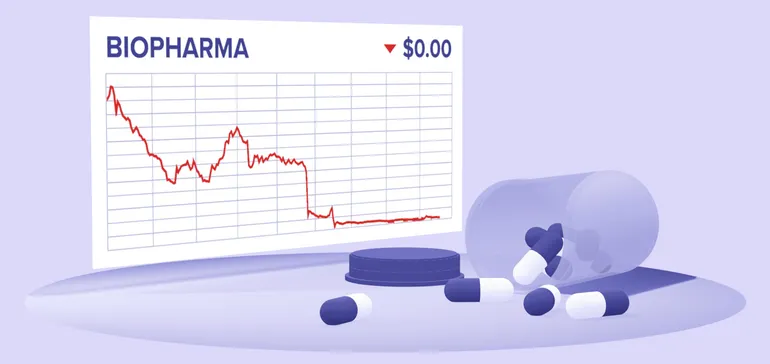
Six years ago, Bind Therapeutics was riding high, with no inkling of the impending blow. Founded by top researchers from MIT and Harvard, this biotechnology company drew widespread attention in 2013 when it advanced its public offering, backed by a grand scientific vision. Company management believed its nanomedicine platform, despite having only completed Phase 1 clinical trials, represented the next breakthrough in cancer treatment.
However, those dreams were shattered within three years. As its experimental therapies stalled in clinical testing, Bind was punished by the market, and debt repayment pressures ultimately forced the company to file for bankruptcy in 2016.
In today's life sciences ecosystem, where biotech companies often go public at earlier stages and with higher expectations, Bind's story may serve as a cautionary tale.
Although bankruptcy is a rare outcome for biopharmaceutical companies, 2019 broke that trend—the number of bankruptcy filings increased. According to data tracked by BankruptcyData, 11 companies have filed for bankruptcy so far this year, compared to an average of only about 4 per year over the past decade.
Industry experts told BioPharma Dive that this increase may signal that more companies will head toward zero, especially during a period when the industry faces rising legal and political headwinds. After a decade of booming growth, a surge of newly public biotech companies may struggle to withstand market pressures.
"I think we're at an inflection point now," Bind's former CEO Andrew Hirsch said in an interview. "This model is not sustainable."
Hirsch noted that early-stage platform companies like Bind are going public in greater numbers and at higher valuations, a trend that is increasingly pronounced. He warned this could lead to steeper downside risks.
"Things don't always work the first time—that's an iron rule of the industry. Many times, companies are valued as if they're 'perfect,'" said Hirsch, who now serves as CFO of Agios Pharmaceuticals. "If you're lucky and successful, that's great. But if you stumble because you're doing innovative work, the public market can be a cruel place."
The drag of legal and political threats
Over the past decade, the biotech sector has far outperformed the broader market, with steady capital inflows supporting more companies going public at high valuations. But the tide has turned. Since peaking last summer, a leading biotech index has fallen more than 15%, while the S&P 500 has risen nearly 13% over the same period. The capital that funds biopharmaceutical ambitions is also retreating—one Wall Street firm estimates net capital outflows of $8.7 billion this year, rivaling the period from late 2015 to early 2016.
Investor anxiety is intensifying at a time when more companies are competing for capital than in past decades. Evercore ISI analyst Josh Schimmer said he has noticed a significant shift in investor sentiment this year.
"The market is more unforgiving than ever when companies stumble," Schimmer said in an interview. "They don't get second chances the way they used to. That could be a factor driving the rise in bankruptcy rates."
Small biotech companies are not the only group facing rising bankruptcy risk. Pressure from thousands of lawsuits related to opioid marketing has brought down Purdue Pharma and Insys Therapeutics. Several companies, including Teva Pharmaceutical, Mallinckrodt, and Amneal, also face the risk of joining their ranks. SVB Leerink analyst Ami Fadia said in an interview that legal uncertainty makes these companies "uninvestable." Additionally, she added, many of these pharmaceutical companies are highly leveraged and face problems with future cash flow generation.
"Clearly, some of these companies face a high risk of bankruptcy," said Fadia, who covers several pharmaceutical companies including Mallinckrodt and Amneal.
To be sure, the impact of opioid liabilities is limited to a relatively small group of companies. But heading into an election year where drug pricing is a top issue, concerns about capital fleeing the industry and the legal crackdown on opioid manufacturers could be further exacerbated by political threats. Industry lobbying groups have fiercely attacked the Democratic Party's main drug pricing proposal, HR3, saying it would erode the upside of biopharma's high-risk, high-reward investment logic, triggering a "nuclear winter."
"If HR3 becomes law, it's lights out for many very small biotech companies that have no revenue and depend on attracting capital," PhRMA CEO Stephen Ubl said at a recent media briefing.
Industry-specific concerns are, of course, set against broader worries about an economic slowdown. Financial analysts have pointed to recession signals in the U.S., and if those signals become reality, they would further squeeze the industry.
"A recession may be coming, and then capital itself will be scarcer for companies," said Bob Eisenbach, a bankruptcy-focused lawyer at Cooley law firm. "And when that happens, even good companies come under pressure."
Falling into the "great maw"
Biopharmaceutical companies are structured to avoid bankruptcy. Companies without revenue typically carry little debt, and if their pipelines fail, there are few assets to reorganize through bankruptcy court. Private biotech companies, when facing clinical failures, can also avoid bankruptcy through acquisition by their financial backers, saving face for venture investors.
"It just disappears into the great maw of the biotech universe," venture capitalist Kevin Kinsella, founder of Avalon Ventures, said in an interview about struggling biotech companies.
Kinsella has founded more than 100 biopharmaceutical companies, including well-known names like Vertex, Neurocrine, and Onyx. He said he has been lucky enough never to be involved in a bankruptcy. "Truly complete failures, where the lights go out, are actually not common in our industry," he said.
Pharmaceutical companies, whether young or mature, derive more value from ideas and hope than from tangible assets or resources. Just last year, early-stage platform companies like Moderna Therapeutics and Rubius Therapeutics went public at multi-billion-dollar valuations despite lacking profits and significant clinical data.
But investor sentiment appears to have shifted. Rubius, for example, has fallen more than 70% since its IPO. Moderna's stock, though up this month, is still 30% below its 52-week high from May. Bind's former CEO said market sentiment has turned when it comes to platform companies.
"Investors have lost interest in companies that go public with preclinical data," Hirsch said. "In the future, you may see more cases like this: a company is at the preclinical stage, goes public, and is then left alone, forced to raise additional capital from the public market, and eventually gets into trouble."
However, even struggling biotech companies can hold on for years or even decades. Long-time industry veterans like Xoma, Novavax, and Geron have survived while searching unsuccessfully for their first drug, enduring clinical failures along the way. Despite cumulative losses exceeding $1 billion, these companies have still found the necessary capital to keep going.
"There's always someone willing to bet that the next discovery is just around the corner, or the next asset, or if we can just get this clinical trial fully enrolled and finished, everything will be fine," Kinsella said. "Hope always exists."
Beyond selling hope, biopharmaceutical companies, like other businesses, have practical options to avoid bankruptcy. Turnaround experts say restructuring and raising cash are the primary focuses. Corporate restructuring typically shrinks operations through layoffs, asset sales, or terminating R&D programs. Raising capital can include licensing out experimental therapy rights, taking on debt, or conducting secondary stock offerings through the public market.
If those options are exhausted, M&A can be another path for shareholders. Firms like Deerfield Management, Hercules Capital, and Highbridge Capital Management often assist struggling biotech companies in such efforts. For example, Deerfield reached an agreement to finance Dynavax's R&D costs and helped fund Melinta Therapeutics' acquisition of an infectious disease business.
A last resort might be merging with another struggling biotech company, or becoming a reverse merger shell for another company seeking a shortcut to the public market. Both scenarios have occurred in just the past few weeks. Foamix Pharmaceuticals and Menlo Therapeutics merged into a dermatology company, while NewLink Genetics became the shell for Lumos Pharma to enter the public market.
These strategies act like a moat, shielding the high-risk industry from bankruptcy. In recent years, they have worked extremely effectively. According to data tracked by Evercore ISI, of the 333 biopharmaceutical companies that went public since 2012, only 3% have filed for bankruptcy, 6% became reverse merger shells, and 10% exited through M&A.
But with the biopharmaceutical industry's outlook uncertain in 2019, some have begun to question how the market will respond.
Can biopharma weather the storm?
Investment bank Jefferies said the past few years have seen "record levels of capital raising," with 100 initial public offerings and 270 follow-on offerings in 2018 and 2019, raising tens of billions of dollars in cash. Meanwhile, the number of publicly listed small and mid-cap biotech companies has doubled over the past decade. Not only are there more such small companies, but their average value is higher and they consume more capital. Jefferies found that from 2010 to the present, the typical market cap of these companies has doubled, R&D budgets have tripled, and cash burn rates have quadrupled.
The annual burn rate for these biotech companies (with market caps between $200 million and $5 billion) has increased from $20 million to $80 million. Jefferies analyst Michael Yee attributes this to free-flowing capital, more platform companies, and an arms race in oncology. The biotech sector's remarkable market performance made all this possible. For example, since the market bottomed in March 2009, a leading biotech index has outperformed the S&P 500 by 30%.
But recently, the biotech sector has struggled, creating a more difficult financing environment.
"The question is whether this model is sustainable if market and macro conditions become more severe and political uncertainty becomes more pronounced, forcing companies to tighten their belts to get through 2020," Yee wrote.
By some metrics, the situation has clearly deteriorated, such as the amount of money flowing into healthcare or biotech-specific funds. Data tracked by Piper Jaffray shows that $8.7 billion in investments have flowed out of such funds in 2019. Ten of the past 12 weeks have recorded net capital outflows, a streak that one Piper Jaffray analyst called the "apparent new normal."
Billions of dollars also flowed out of biotech in 2015 and 2016, when many biotech stocks fell and the prospect of Hillary Clinton's presidency heightened investor concerns about drug pricing. The biotech industry weathered that storm, with few companies entering bankruptcy, and has continued to grow since. Looking ahead, a key question will be determining whether the industry is on a new trajectory or will emerge from this period relatively unscathed.
"Getting investor attention has been harder from the start than ever before," Evercore's Schimmer said. "For a company that has already stumbled, even if they're doing the right things, it's a struggle."
