
AstraZeneca and Bristol-Myers Squibb's 'mega-merger' rumors raise Wall Street concerns
The Financial Times, citing sources familiar with the matter, reported that AstraZeneca and Bristol-Myers Squibb discussed a merger in recent months, but Wall Street reacted negatively, with AstraZeneca's share price falling over 8% at one point, erasing approximately $22 billion in market value. Analysts questioned the rationale for the deal and noted that antitrust issues and valuation differences could be major obstacles.
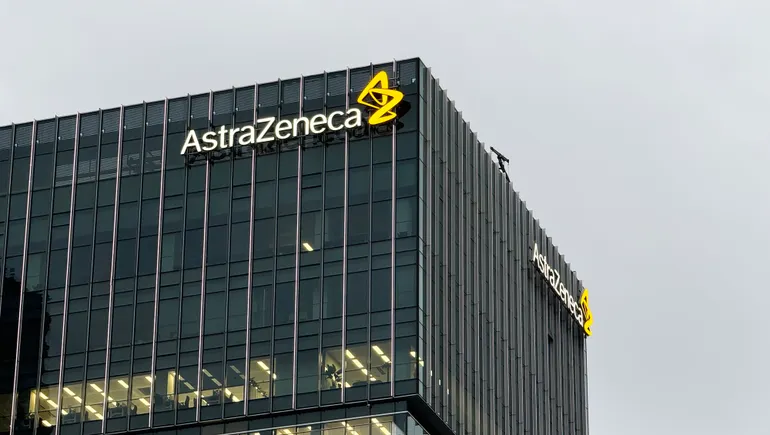
A rumor about a potential "mega-merger" between pharmaceutical giants AstraZeneca and Bristol Myers Squibb is triggering a strong backlash on Wall Street—analysts are puzzled, and it has sparked significant stock selling.
According to sources familiar with the matter, the Financial Times reported on Sunday that AstraZeneca and Bristol Myers Squibb have held discussions about a merger in recent months; although a deal could take shape soon, it also faces the possibility of falling through or being delayed. Reuters later partially confirmed these details, citing a source, saying the two companies have had preliminary contact about a potential merger.
The market reaction shows investors are not pleased with the deal coming to fruition. In early trading on Monday, Bristol Myers Squibb shares fell nearly 1.5%, while AstraZeneca shares dropped more than 8%, erasing about $22 billion in market value for the British company. AstraZeneca completed a direct listing on the New York Stock Exchange earlier this year, but its primary listing remains on the London Stock Exchange.
If the deal goes through, it would become one of the largest mergers in the pharmaceutical industry, with the combined entity valued at nearly $400 billion. At the same time, it would further strengthen AstraZeneca's advantages in its two core product areas—oncology and cardiovascular drugs—which accounted for 44% and 22% of the company's $59 billion in revenue last year, respectively.
Bristol Myers Squibb's top-selling products include the immunotherapy Opdivo, the anticoagulant Eliquis, and the immunomodulator Orencia. The first two products face key patent expirations in the coming years, putting pressure on Bristol Myers Squibb to develop new drugs to offset declining revenue.
In this regard, the company's performance has been mixed. Its latest earnings beat analyst expectations, partly thanks to strong performance from newer drugs like Reblozyl, Breyanzi, and Camzyos. However, sales contributions from Eliquis supported the quarter's results. Other so-called growth products, such as the schizophrenia drug Cobenfy, which the company acquired for $14 billion, have yet to achieve impressive commercial results.
Michael Leuchten, Jefferies' analyst covering AstraZeneca, believes acquiring Bristol Myers Squibb would be a "head-scratching" move, especially given the series of major wins AstraZeneca has achieved over the past few years under CEO Pascal Soriot. By the end of 2025, the company had 16 products with annual sales of $1 billion or more. The company expects this number to exceed 25 by 2030, with sales surpassing $80 billion.
AstraZeneca's revenue grew 8% last year, and its stock has risen about 37% since mid-2021.
Given the company's existing growth momentum and promising research pipeline, "we are somewhat puzzled by this news," Leuchten wrote in a note to clients. "Of course, financial accretion might look good, and more cash flow could support more R&D. But if there is one company that doesn't need financial engineering, it's AstraZeneca."
The market's skepticism is "understandable," said Alex Torgerson, a mergers and acquisitions partner at consulting firm West Monroe.
"AstraZeneca has been one of the strongest organic growth stories in the industry, so investors naturally ask why take on the complexity of a potential $400 billion mega-merger rather than continuing to execute the existing strategy," Torgerson wrote in an email to BioPharma Dive.
Analysts expect such a deal may not be easy to reach. First, it would likely attract scrutiny from antitrust regulators. William Blair analyst Matt Phipps noted that review would be particularly stringent in the UK, as AstraZeneca is "arguably" a "cornerstone" of the country's biopharmaceutical R&D ecosystem.
Price could also become a sticking point in negotiations. On one hand, Bristol Myers Squibb's top products face patent pressure; on the other, the company expects to release important clinical trial data for Cobenfy, the anticoagulant milvexian, and other experimental drugs in the coming months.
"Reaching agreement on value could be difficult," wrote Trung Huynh, an analyst at RBC Capital Markets. "Both sides need compelling economic and strategic reasons to support a merger."
More broadly, a merger of this scale could have ripple effects on industry dealmaking. It could not only keep two well-known acquirers largely on the sidelines for a period, but also signal that "transformative" deals are back on the agenda for big pharma—after a period when "bolt-on" deals, ranging from $5 billion to $10 billion, were more popular.
"Whether or not this deal happens, it shows big pharma may be thinking about growth differently," Torgerson wrote.
"In recent years, the industry has favored targeted biotech acquisitions over mega-mergers," he added. "If AstraZeneca is exploring a deal of this size, it could prompt other large pharma companies to reassess whether transformative deals should return to their M&A strategies."
Bristol Myers Squibb did not respond to BioPharma Dive's request for comment. AstraZeneca declined to comment.